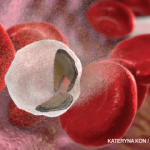
Vacuoles, E1-ubiquitin–activating enzyme, X-linked, autoinflammatory, somatic syndrome (VEXAS) is a progressive, adult-onset systemic inflammatory and hematologic disease caused by somatic mutations in the UBA1 gene. Patients with VEXAS have a heterogeneous phenotype and present with a variety of rheumatologic, hematologic, dermatologic and pulmonary manifestations.
To better understand the condition, Anderson et al. examined the impact of age, sex, disease duration and variant allele frequency on disease penetrance (i.e., the likelihood that a clinical disease will occur when a particular genotype is present) in two large participant cohorts. Whole exome sequencing data from 192,584 participants from the Geisinger MyCode Community Health Initiative and Mount Sinai BioMe Biobank cohorts were analyzed for disease-causing variants in UBA1. Clinical characteristics of those participants found to have UBA1 variants were assessed through extensive medical record review.
The Results
The researchers identified nine UBA1 variants in 23 participants (variant allele frequency range of 2.9–79%), 21 of whom (91%) had evidence of clinical disease in their medical records. Participants with high UBA1 developed macrocytic anemia more often than patients with low UBA1 variant allele frequency (87.5 % vs. 27%; P=0.009).
In two participants with high variant allele frequency, macrocytosis developed more than five years before the time of sample collection, followed by anemia approximately at the time of sample collection. In one low variant allele frequency case with other inflammatory symptoms, macrocytic anemia did not develop until five years after sample collection.
Female participants were enriched in the lower variant allele frequency group, and had milder symptoms, suggesting a protective role against disease severity. Cases with low variant allele frequency, especially ≤10%, can be initially asymptomatic and later develop disease.
Conclusion
Among persons not known to have VEXAS clinical manifestations. such as macrocytic anemia, are increased in those with high UBA1 variant allele frequency. Patients with low UBA1 variant allele frequency demonstrate incomplete penetrance, tending toward milder disease manifestations.
For complete details, including source material, refer to the full study.
Excerpted and adapted from:
Andreson M, Ercelen D, Richardson A, et al. Clinical manifestations of VEXAS syndrome across a broad spectrum of UBA1 mutation burden. Arthritis Rheumatol. 2026 Jan;78(1).