ACR Convergence 2025| Video: Rheum for Everyone, Episode 26—Ableism

An official publication of the ACR and the ARP serving rheumatologists and rheumatology professionals

  • Conditions
    • Axial Spondyloarthritis
    • Gout and Crystalline Arthritis
    • Myositis
    • Osteoarthritis and Bone Disorders
    • Pain Syndromes
    • Pediatric Conditions
    • Psoriatic Arthritis
    • Rheumatoid Arthritis
    • Sjögren’s Disease
    • Systemic Lupus Erythematosus
    • Systemic Sclerosis
    • Vasculitis
    • Other Rheumatic Conditions
  • FocusRheum
    • ANCA-Associated Vasculitis
    • Axial Spondyloarthritis
    • Gout
    • Lupus Nephritis
    • Psoriatic Arthritis
    • Rheumatoid Arthritis
    • Sjögren’s Disease
    • Systemic Lupus Erythematosus
  • Guidance
    • Clinical Criteria/Guidelines
    • Ethics
    • Legal Updates
    • Legislation & Advocacy
    • Meeting Reports
      • ACR Convergence
      • Other ACR meetings
      • EULAR/Other
    • Research Rheum
  • Drug Updates
    • Analgesics
    • Biologics/DMARDs
  • Practice Support
    • Billing/Coding
    • EMRs
    • Facility
    • Insurance
    • Technology
      • Information Technology
      • Apps
    • QA/QI
    • Workforce
  • Opinion
    • Patient Perspective
    • Profiles
    • Rheuminations
      • Video
    • Speak Out Rheum
  • Career
    • ACR ExamRheum
    • Awards
    • Career Development
      • Education & Training
    • Certification
  • ACR
    • ACR Home
    • ACR Convergence
    • ACR Guidelines
    • Journals
      • ACR Open Rheumatology
      • Arthritis & Rheumatology
      • Arthritis Care & Research
    • From the College
    • Events/CME
    • President’s Perspective
  • Search

A Focus on Wellness; Keynote Speaker Tait Shananfelt, MD, Shared Causes of Occupational Burnout & Pearls to Prevent It

Vanessa Caceres  |  Issue: December 2025  |  October 30, 2025

Another contributing factor to burnout is the double-edged sword of common physician traits. Example: Most physicians are thorough, committed to their patients and recognize the responsibility that comes with patient trust. These are important qualities that make us good physicians, he said, but they also often make it hard to set boundaries or take time off. This makes it harder for us to relax and  allocate time for family.

Some signs of burnout include losing the sense that you’re making a difference at work, seeing your patients or co-workers in a less-than-human way (also called depersonalization) and emotional exhaustion.

ad goes here:advert-1
ADVERTISEMENT
SCROLL TO CONTINUE

Although it’s common for everyone to experience those feelings, when they occur too frequently and to too severe a degree they indicate burnout, which can undermine professional efficacy. Occupational burnout is common among physicians and other healthcare workers and is also frequently experienced by those whose work involves intense contact with people, such as teachers, social workers and police officers, he said.

Facing professional burnout can become a big issue because of how it affects a person’s life professionally and personally, Dr. Shanafelt said. It can strain relationships and increase the risk for alcohol use and depression. Professionally, it can raise the risk of turnover, sub-optimal patient experience and medical errors.

ad goes here:advert-2
ADVERTISEMENT
SCROLL TO CONTINUE

Pearls to Address Burnout
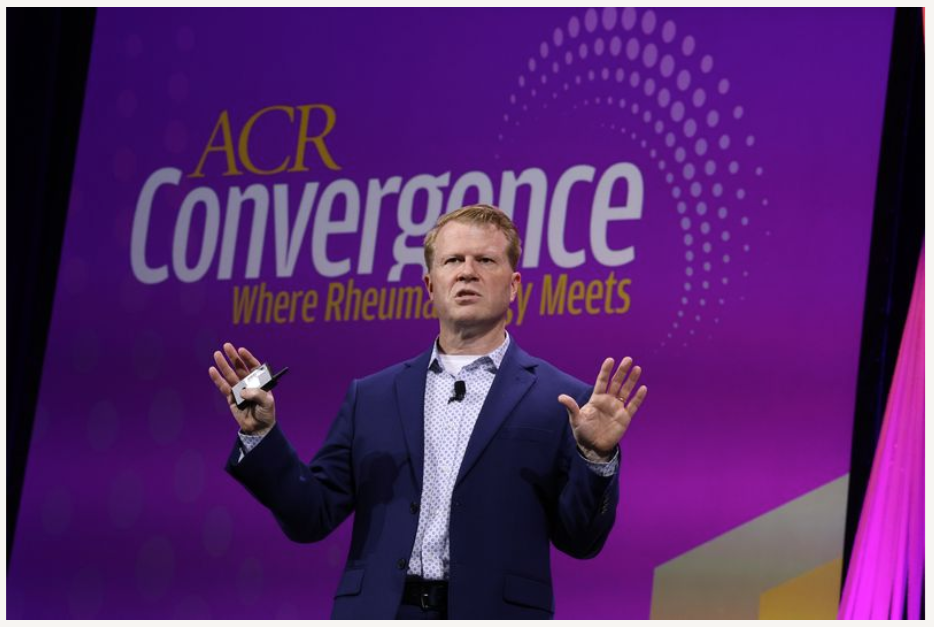
Dr. Tait Shanafelt at ACR Convergence 2025

Dr. Tait Shanafelt at ACR Convergence 2025

While some have suggested that physicians and other clinicians need to be tougher or more resilient, that’s the wrong answer. Physicians are already incredibly resilient, Dr. Shanafelt explained.

“The current healthcare delivery system is burning out [some of] the most resilient human beings on planet Earth. We won’t resilience our way out of this,” he said.

Dr. Shanafelt spent the majority of this time focused on what healthcare organizations need to do to address this issue. Steps included:

  1. Start at the top. Dr. Shanafelt indicated that leader behavior is a key driver of the professional fulfillment of the physicians they lead. Effective leaders create a shared sense of purpose within for team members, engage team members to identify and prioritize opportunities for improvement, and empower them to put those that are possible into practive.
  2. At the organizational level, find changes to make daily work less burdensome. He gave a surgical example. “If your ORs are taking too long to turn around, and the anesthesiologist, surgeon and nursing OR team are all going home late and missing dinner, the solution is not to teach the surgeon to meditate between cases. It’s to get the operating room turned around more efficiently,” he said. If many initiatives are needed to make workflow more efficient, start with one actionable step and then build out from there.
  3. Consider using ambient AI note taking. Given the evidence that EHR documentation burden is one major contributor to burnout, it is important organizations address this issue. Ambient AI note taking during an appointment may not address all of this burden, but eight studies published in the past 12 months suggest it can make a major impact.  Although EHR timestamps suggest the time savings is modest (20 minutes per four hours of seeing patients) the reductions in cognitive load and burnout are large.2

“In my own practice when I use this, I find I’m able to pay attention to the patient. I don’t worry about tracking every detail of what they’re telling me,” he explained.


Page: 1 2 3 4 | Single Page
Share: 

Filed under:ACR ConvergenceCareerMeeting ReportsProfessional TopicsWorkforce Tagged with:ACR Convergence 2025

Related Articles

    Recognizing Physician Burnout, & Tips to Fight It

    February 17, 2018

    4 Patients in 4 Weeks Baltimore is a little over two hours away from Richmond, Va., by car. I know this now because I recently drove to Richmond to attend a memorial service. I drove in silence. Music made me sleepy, and I could not bear to listen to another iteration of how we are…

    Study: Don’t Automatically Blame Burnout on Electronic Health Records

    May 12, 2022

    When it comes to experiencing burnout, time spent in an electronic health records (EHR) system appears to be only a minor contributing factor. Although clinicians and other healthcare professionals may log many hours at the keyboard putting information into the EHR, other factors likely play a bigger role in the workplace exhaustion and feelings of…

    More Than Half of U.S. Doctors Experience Burnout

    December 4, 2015

    (Reuters Health)—Burnout among U.S. doctors is becoming more common and now affects more than half of practicing physicians, according to a new study.¹ About 54% of U.S. doctors experienced at least one symptom of burnout in 2014, compared to about 46% in 2011, researchers report in Mayo Clinic Proceedings. ad goes here:advert-1ADVERTISEMENTSCROLL TO CONTINUEOverall, the researchers…

    Meditation May Help Prevent Physician Burnout

    October 14, 2015

    Physician burnout is high and climbing. A 2015 report published by Medscape showed that nearly half (46%) of physicians surveyed responded that they were experiencing burnout; that number is up from 39.8% reported in a similar survey in 2013.1 These physicians experience the tell-tale signs of burnout: loss of enthusiasm for work (or emotional exhaustion),…

  • About Us
  • Meet the Editors
  • Issue Archives
  • Contribute
  • Advertise
  • Contact Us
  • Copyright © 2025 by John Wiley & Sons, Inc. All rights reserved, including rights for text and data mining and training of artificial technologies or similar technologies. ISSN 1931-3268 (print). ISSN 1931-3209 (online).
  • DEI Statement
  • Privacy Policy
  • Terms of Use
  • Cookie Preferences