ACR Convergence 2025| Video: Rheum for Everyone, Episode 26—Ableism

An official publication of the ACR and the ARP serving rheumatologists and rheumatology professionals

  • Conditions
    • Axial Spondyloarthritis
    • Gout and Crystalline Arthritis
    • Myositis
    • Osteoarthritis and Bone Disorders
    • Pain Syndromes
    • Pediatric Conditions
    • Psoriatic Arthritis
    • Rheumatoid Arthritis
    • Sjögren’s Disease
    • Systemic Lupus Erythematosus
    • Systemic Sclerosis
    • Vasculitis
    • Other Rheumatic Conditions
  • FocusRheum
    • ANCA-Associated Vasculitis
    • Axial Spondyloarthritis
    • Gout
    • Lupus Nephritis
    • Psoriatic Arthritis
    • Rheumatoid Arthritis
    • Sjögren’s Disease
    • Systemic Lupus Erythematosus
  • Guidance
    • Clinical Criteria/Guidelines
    • Ethics
    • Legal Updates
    • Legislation & Advocacy
    • Meeting Reports
      • ACR Convergence
      • Other ACR meetings
      • EULAR/Other
    • Research Rheum
  • Drug Updates
    • Analgesics
    • Biologics/DMARDs
  • Practice Support
    • Billing/Coding
    • EMRs
    • Facility
    • Insurance
    • Technology
      • Information Technology
      • Apps
    • QA/QI
    • Workforce
  • Opinion
    • Patient Perspective
    • Profiles
    • Rheuminations
      • Video
    • Speak Out Rheum
  • Career
    • ACR ExamRheum
    • Awards
    • Career Development
      • Education & Training
    • Certification
  • ACR
    • ACR Home
    • ACR Convergence
    • ACR Guidelines
    • Journals
      • ACR Open Rheumatology
      • Arthritis & Rheumatology
      • Arthritis Care & Research
    • From the College
    • Events/CME
    • President’s Perspective
  • Search

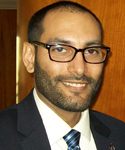
Meet New ACR President William (Will) F. Harvey

Leslie Mertz, PhD  |  Issue: November 2025  |  October 29, 2025

TR: Looking beyond 2026, what do you see as important challenges facing the College?

Dr. Harvey: Without the support of research into rheumatic diseases and their treatments, neither the current nor the next generation of patients will have the treatments they need. For example, if research funding goes away, that cuts off the pipeline of people who are training to be researchers, and since it takes a long time to go from training to becoming a successful researcher who is making discoveries, that can mean a generation of researchers lost. So we have to support needed reforms to the National Institutes of Health that will allow it to reinvigorate itself over the course of the next few years.

ad goes here:advert-1
ADVERTISEMENT
SCROLL TO CONTINUE

In addition, we need Medicare and Medicaid reform to help patients gain access to the treatments they need. It won’t matter how many new treatments we discover if those treatments are expensive and the coverage isn’t there for the patient to access the medication.

TR: Let’s talk about you personally. You have a full plate as a clinician, researcher, professor and administrator, but you still volunteer for the ACR. Why?

ad goes here:advert-2
ADVERTISEMENT
SCROLL TO CONTINUE

Dr. Harvey: The reason I volunteer is because of my love for the specialty, which has given me so much joy and fulfillment in the work that I’m able to do. In my personal journey, the College has always been there to give me new experiences and to teach me new things about being a better physician and a better leader, so it’s really become my passion to try to give some of that back.

TR: What would you like to share about yourself to help readers get to know you a bit better?

Dr. Harvey: Let’s see. I really enjoy cooking. Part of it is that things don’t always go exactly the way you expect. Maybe you run out of an ingredient or you find something that might be a nice addition to a recipe, so you adapt, you try something different, and it works out: You end up with something that is nourishing and fulfilling at the end of the day.

I approach rheumatology with the same attitude: The path may have some obstacles, but if you are willing to try something new, you can find a way forward.

What can I say? I have a lot of positivity that I hope is a little bit infectious.

Page: 1 2 3 4 5 | Single Page
Share: 

Filed under:ACR ConvergenceFrom the CollegePresident's PerspectiveProfiles Tagged with:Access to medicationACR Convergence 2025ACR presidentAdvocacyDr. William (WILL) F. HarveyLegislation & AdvocacyReimbursementResearch Fundingworkforce shortage

Related Articles

    William ‘Will’ F. Harvey, MD, MSc, FACR, Joins ACR Executive Committee as Secretary

    September 10, 2023

    Stepping into the role of ACR secretary, William F. Harvey, MD, MSc, FACR, will pursue member engagement and corporate relations priorities, building on his long history of volunteer work in the College.

    Evolution of Medicare’s Merit-Based Incentive Payment System: MIPS Value Pathways

    December 1, 2022

    In November, the CMS finalized 12 MIPS Value Pathways (MVP) in the Quality Payment Program, including a rheumatology MVP. In 2023, clinicians can opt to report via traditional MIPS, the rheumatology MVP or both.

    MACRA: More Points, Smarter Future

    December 14, 2016

    As the Medicare Access and CHIP Reauthorization Act of 2015 (MACRA) is implemented in January with new models for quality-based reimbursement payments, rheumatologists must seize control of how they will be paid now—and in the future. This message was stressed by speakers during Holy MACRA! How to Survive and Thrive in the Era of MACRA,…

    RHIT Chair William F. Harvey, MD, MSc, Promotes the Use of Health Data to Improve Practice and Care

    January 6, 2021

    As the new chair of the Registries & Health Information Technology Committee, William F. Harvey, MD, MSc, hopes to expand representation of patient diversity in the RISE registry and increase the use of registry data for research.

  • About Us
  • Meet the Editors
  • Issue Archives
  • Contribute
  • Advertise
  • Contact Us
  • Copyright © 2025 by John Wiley & Sons, Inc. All rights reserved, including rights for text and data mining and training of artificial technologies or similar technologies. ISSN 1931-3268 (print). ISSN 1931-3209 (online).
  • DEI Statement
  • Privacy Policy
  • Terms of Use
  • Cookie Preferences