Dr. Petri recommends checking urine protein to creatinine ratios [UPCR] often to assess for flare. She noted the importance of checking adherence, particularly given medication side effects. “For mycophenolate, you can check a trough level; you want a trough level above 3 to know the patient is at least taking it,” she said.
Dr. Petri emphasized the importance of discussing dialysis with our patients and to avoid putting the remaining nephrons at risk, including avoiding non-steroidal anti-inflammatory drugs (NSAIDs), computed tomography dye and proton pump inhibitor use.
Treatment Duration
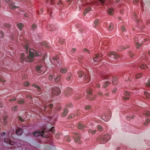
Dr. Petri highlighted the work of Argentinian nephrologist Ana Malvar, MD, on end-of-treatment biopsies. “The only way we know lupus nephritis is in remission is when immunofluorescence is gone on an end-of-treatment biopsy,” she noted.
Dr. Petri also feels the conditional recommendation in the 2024 ACR guideline for Screening, Treatment and Management of Lupus Nephritis to treat all patients with lupus nephritis for three to five years should be individualized.5 “Even four years after treating lupus nephritis, there are still large numbers of lupus patients who have immunoglobulin and C1q deposition in the kidney biopsy,” she said. “You want no immunofluorescence on the end-of-treatment biopsy.”
Comments on ACR Guidelines
Next, Dr. Petri gave her thoughts on the recently released 2024 ACR guidelines. She agreed the use of mycophenolate alone is inadequate in treating nephritis. “What I think the ACR [guideline] got wrong is using the term triple therapy, with triple therapy including the drug I hate: prednisone,” she remarked. She feels triple therapy allowing up to 40 mg of prednisone is too high, referencing the innovative, successful randomized controlled trial of voclosporin, which used only 20–25 mg of oral prednisone at baseline in all patients.6
“The other mistake I think the ACR [guideline] made is that pure membranous nephritis is treated the same as proliferative,” Dr. Petri said. “Membranous [nephritis] does not lead to rapid renal failure.” She noted nephrologists do not routinely prescribe methylprednisolone or high doses of prednisone in the treatment of idiopathic membranous patients. Steroids can worsen infection risk, thrombotic risk and hyperlipidemia in those with nephrotic syndrome, so risks and benefits must be weighed.
Last, Dr. Petri disagrees with the ACR decision that anti-CD20 therapy is recommended as a “late option” in the algorithm for treating lupus nephritis. She highlighted subgroup analysis data from the recent trial of obinutuzumab—published after the ACR guideline was completed—stating, “The clinical trial of obinutuzumab recently published clearly shows it works best if used early. We expect obinutuzumab to get FDA approval around October [2025].”7