 When Shawn Baca, MD, FACR, looks at his fellow physicians, he sees more than medical expertise; he also sees colleagues who are struggling with overwhelming workloads and fighting burnout. A rheumatologist with Rheumatology Associates of South Florida in Boca Raton, Dr. Baca understands how easily stress can take root.
“We have a broken healthcare system that excessively rewards middlemen and does not serve our patients or physicians,” Dr. Baca explains.
Dr. Baca says the frustration extends beyond practicing physicians. Many medical students and residents are also using the free counseling services.
“They’re having a hard time adjusting. A recent report found that up to 40% of medical students are considering not practicing clinical medicine,” he says.1
A Career Based on Service
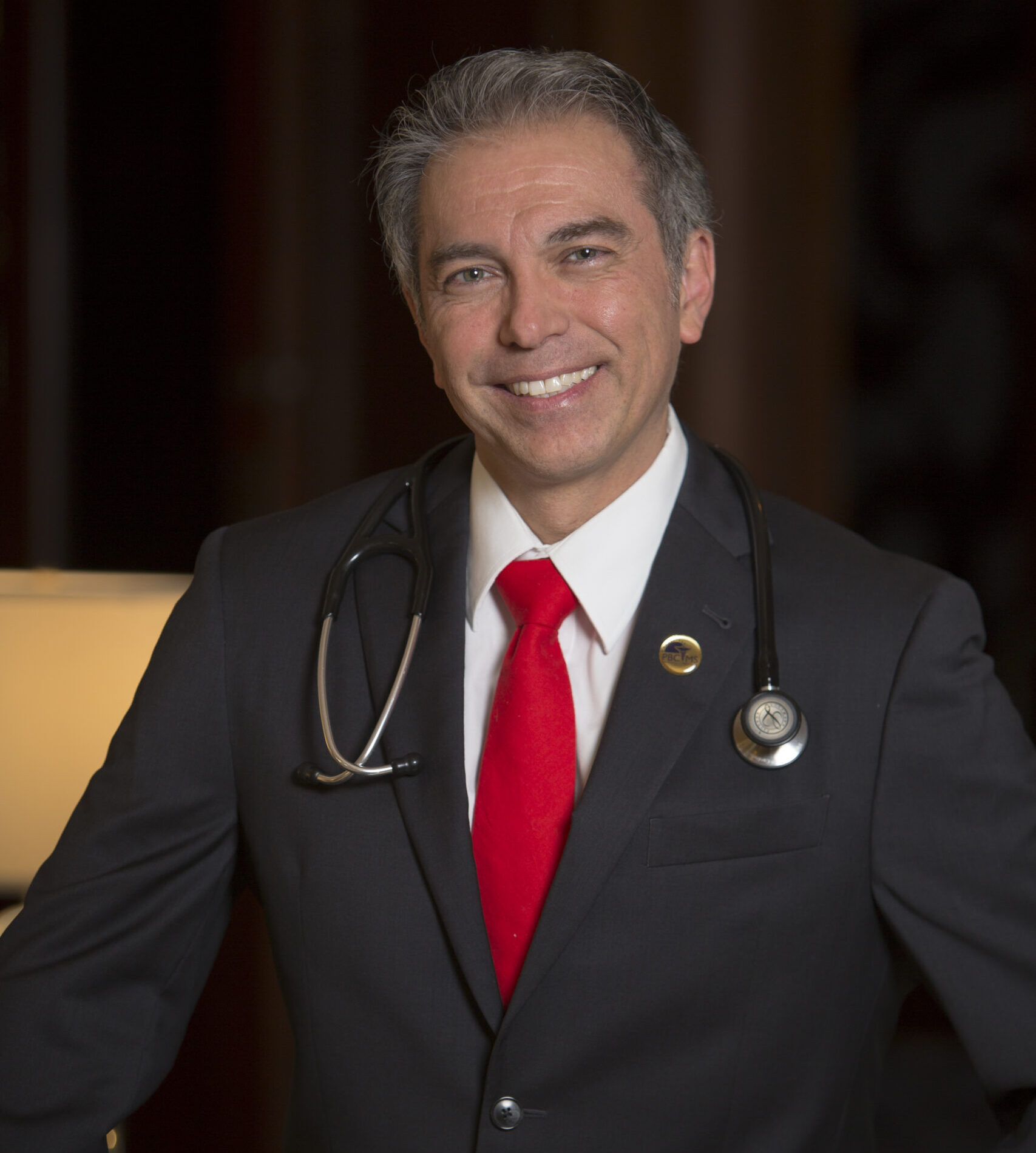
Dr. Shawn Baca
A native of Albuquerque, N.M., Dr. Baca earned both his undergraduate degree and medical degree at the University of New Mexico, Albuquerque. He moved to Florida in 1987 to complete his internal medicine training at Mount Sinai Medical Center, Miami Beach. During his training, he was named intern of the year, given the Furlong award for outstanding performance by a medical resident, and later served as chief medical resident. Dr. Baca went on to complete a clinical rheumatology and research fellowship at the University of Miami, focusing his research on osteoarthritis.
Dr. Baca has practiced with Rheumatology Associates of South Florida since 1992 and remains a passionate advocate for independent medical practices and better patient care.
“I believe the purest form of care is private practice—where the only person you answer to is your patient and their well-being is your top priority,” he says. “In a hospital or corporate setting, you’re ultimately working to satisfy an employer, which has an inherent conflict of interest. Private practices can also fill gaps in our dysfunctional healthcare system to support patients with terrible illnesses who aren’t insured or are underinsured.”
He adds that his practice, along with a few other well-respected rheumatology private practices in South Florida, have provided free care for patients without means, in various offices, for the past 35 years.
Beyond his clinical work, Dr. Baca volunteers extensively with professional societies to shape policy, protect physician autonomy and improve patient care. He is a member of the ACR, American Medical Association (AMA), Florida Medical Association (FMA), Creaky Joints South Florida Free Arthritis Clinics, Florida Society of Rheumatology and Palm Beach County Medical Society, where, after serving as president, member at large, treasurer, secretary and vice president, he continues to serve on its board of directors.
He notes that physicians today are feeling the squeeze as rising practice costs, stagnant reimbursement rates and mounting administrative demands make it harder to stay independent.
“Essentially, doctors are being reimbursed about the same as they were two decades ago, despite medical inflation,” Dr. Baca explains. “That’s driving many out of private practice and into corporate medicine. Unfortunately, that shift can add even more stress, as physicians are not only expected to care for their patients, but also to meet their employer’s bottom line.”
He adds that it’s also not uncommon for rheumatologists to order something clearly needed for a patient, only to have the insurance company deny it. Many physicians also wait months to be reimbursed for care they’ve already provided.
Dr. Baca believes that joining local, state and national medical associations gives physicians a collective voice and can spark policy change. He has served on the Florida delegation to the American Medical Association and as chairman of the South Florida Caucus to the FMA.
“The FMA delegation has tried to stimulate the establishment of a database for pre-authorization that could be used at the national level,” Dr. Baca says. “When physicians have to get permission for certain tests and medications, there’s little to no proof that it’s doing anything other than delaying care and hurting patients.”
He envisions an open database—ideally managed by the AMA—as a platform for physicians and patients to share their stories and document how prior authorization harms care.
“Hopefully, the database can serve as a tool to help repair our broken system,” Dr. Baca says.
Dr. Baca has also been active in the fight to hold pharmacy benefit managers (PBMs) accountable for their role in driving up drug costs.
“I helped sponsor the Alliance for Transparent and Affordable Prescriptions (ATAP),” he explains. “We’ve been working for more than 10 years to shed light on PBM practices and push Congress and the public to understand how these practices impact both physicians and patients.”
Although some politicians, such as Congressman Buddy Carter of Georgia, have supported reform, many still don’t realize how PBMs influence patient care for their own financial benefit, he says.
“This is especially concerning for rheumatologists, who often see their treatment decisions undermined by PBM formulary preferences based on profit,” Dr. Baca says.
Although progress can feel slow, Dr. Baca takes pride in accomplishments he’s made at a local level, like the Physician Wellness program in Palm Beach County.
“On a national level, change is like moving the goalpost a centimeter, maybe even a millimeter,” Dr. Baca says. “It can take a long time to see progress, but people are finally starting to realize we have a very broken healthcare system. It could be so much better, and even less expensive, if physicians were part of the solution, because we know how it works.”
He adds that over time, physicians have been replaced by business executives, whose main focus is profit, rather than patient care.
Yet Dr. Baca remains motivated by a deep sense of responsibility.
“It’s important for all physicians to advocate for a better healthcare system,” he says. “I can’t complain about issues in healthcare and not take action myself. I believe if you bring a complaint, you must also bring a potential solution with you.”
Linda Childers is a health writer located in the San Francisco Bay Area.
Reference
- Elsevier. Clinician of the Future 2023: Education Edition. https://www.elsevier.com/insights/clinician-of-the-future/education-edition