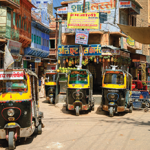
But traffic, like healthcare systems, is not destiny. We have the tools to redesign flow. ACR Convergence 2025 redemonstrated the vital importance of organization, collaboration and, most of all, advocacy during trying times. Collaboration among far flung rheumatologists across the globe, investment in promising technology to advance humanism and team-based care were major themes of this year’s Convergence. To extend the metaphor, these are akin to roundabouts and express lanes for congested, outdated systems. Gridlock may be common, but it is not inevitable.
Back in my car, as I was thinking about these heady concepts, I encountered a rare opportunity. A kind gentleman, likely seeing my Iowa license plate, gestured me forward with a brief wave. That small act of generosity reminded me that even in the most gridlocked systems, small human gestures can generate movement.
Tollways
Eventually, I found the on-ramp for the highway, and like magic, the traffic dissolved. The city fell behind me, replaced by the humming momentum of suburban sprawl. It felt like freedom, for a price of the toll, of course. I gladly pressed the accelerator and finally felt like I was making tangible progress. It was a minor miracle, and I didn’t take it for granted.
At the same time, that tollway reminded me of my privilege. Indeed, some paths to efficiency and ease come at a cost that not everyone can pay. I was incredibly fortunate. I didn’t have to detour through side roads or local routes to avoid tolls. I could afford the faster way, but I recognized that not everyone can. Some people get stuck in inefficient systems not because of poor planning, but because of structural limitations.
As I drove, I thought to myself: What if we made the tollway free for everyone? What if we invested in infrastructure that enabled all patients to move smoothly through the healthcare system, regardless of their background, experiences or income level? We could rethink access, minimize bureaucratic friction and create fast lanes not just for those with means, but for everyone. Fairness, to my perhaps naive mind, should not be controversial. On second thought though, removing the tolls would also mean more congestion, which only means that we would trade one set of problems for another. In short, the real question is what dilemmas we should prioritize to resolve.
Regardless, after an hour or so, as I left that tollway behind and entered a realm of chain restaurants, outlet malls, corporate offices and enormous warehouses, I felt both a sense of momentum and a sharp tinge of discomfort. Suburbia was sprawling in all directions, yet it felt oddly placeless. I was finally moving quickly, but where exactly was I going?