ACR Convergence 2025| Video: Rheum for Everyone, Episode 26—Ableism

An official publication of the ACR and the ARP serving rheumatologists and rheumatology professionals

  • Conditions
    • Axial Spondyloarthritis
    • Gout and Crystalline Arthritis
    • Myositis
    • Osteoarthritis and Bone Disorders
    • Pain Syndromes
    • Pediatric Conditions
    • Psoriatic Arthritis
    • Rheumatoid Arthritis
    • Sjögren’s Disease
    • Systemic Lupus Erythematosus
    • Systemic Sclerosis
    • Vasculitis
    • Other Rheumatic Conditions
  • FocusRheum
    • ANCA-Associated Vasculitis
    • Axial Spondyloarthritis
    • Gout
    • Lupus Nephritis
    • Psoriatic Arthritis
    • Rheumatoid Arthritis
    • Sjögren’s Disease
    • Systemic Lupus Erythematosus
  • Guidance
    • Clinical Criteria/Guidelines
    • Ethics
    • Legal Updates
    • Legislation & Advocacy
    • Meeting Reports
      • ACR Convergence
      • Other ACR meetings
      • EULAR/Other
    • Research Rheum
  • Drug Updates
    • Analgesics
    • Biologics/DMARDs
  • Practice Support
    • Billing/Coding
    • EMRs
    • Facility
    • Insurance
    • Technology
      • Information Technology
      • Apps
    • QA/QI
    • Workforce
  • Opinion
    • Patient Perspective
    • Profiles
    • Rheuminations
      • Video
    • Speak Out Rheum
  • Career
    • ACR ExamRheum
    • Awards
    • Career Development
      • Education & Training
    • Certification
  • ACR
    • ACR Home
    • ACR Convergence
    • ACR Guidelines
    • Journals
      • ACR Open Rheumatology
      • Arthritis & Rheumatology
      • Arthritis Care & Research
    • From the College
    • Events/CME
    • President’s Perspective
  • Search

The ACR Revamps RISE Registry into a Productivity & Learning Tool

Mary Beth Nierengarten  |  November 10, 2025

CHICAGO—In 2026, the ACR will launch a new RISE registry that should be a much better quality improvement platform than its predecessor, which has been in operation since 2014. Instead of focusing solely on quality improvement measures mandated by the Centers for Medicare and Medicaid Services (CMS) for the MACRA program, the new version will allow members to access nearly 30 quality measures through a modern data framework. Along with supporting quality improvement, the new RISE will encourage rheumatologists to share their data in a feedback loop, creating a learning environment in which rheumatology practices and providers can improve their quality of care.

In an ACR Convergence 2025 session titled RISE Rollout: New Features, What to Expect and Future Directions with the New Platform, Tom Tack, senior director of the ACR; David Voccola of IQVIA, Patients Insights Experience & Registries; and Christie Bartels, MD, MS, division head and professor of rheumatology at the University of Wisconsin School of Medicine and ACR RHIT chair, spoke on what ACR members can expect from the new registry and why it is important to join.

ad goes here:advert-1
ADVERTISEMENT
SCROLL TO CONTINUE

Why a New Registry?

Mr. Tack said the RISE update is not simply a facelift, but a transformation from a quality reporting tool to a full-on productivity tool that expands quality improvement beyond the traditional Merit-Based Incentive Payment (MIPS)/MVP focus. With feedback from key stakeholders, he said the ACR decided to completely rethink RISE to evolve it from just a traditional Qualified Clinical Data Registry reporting tool into a clinical productivity tool. The ACR’s research highlighted several advancements, including improvements in technology, that showed the limitations of the current registry. He emphasized that CMS specialty-level quality reporting will only increase over time, and the new RISE will be a platform, tool and instrument that can help practices and providers reach their quality goals. A main aim of the registry, he said, is to help support rheumatology becoming a data-driven specialty.

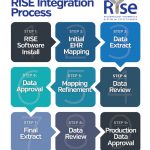
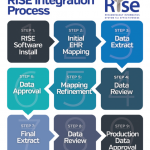
The registry is open to all ACR members, and it has value for each type of rheumatologic practice. For community-based providers, Mr. Tack called RISE a “modern, intuitive, comprehensive and proactive quality improvement management resource that allows you to assess your quality improvement efforts, over time, on all rheumatology-specific and other quality measures [including experimental, draft and test measures].” He also said the new registry allows a simple and easy way to report performance measures to CMS, and underscored how simple it is to register. “Once set up, RISE is highly automated, requiring virtually no administrative or IT time or resources,” he said.
ad goes here:advert-2
ADVERTISEMENT
SCROLL TO CONTINUE

Page: 1 2 3 | Single Page
Share: 

Filed under:ACR ConvergenceFrom the CollegeInformation TechnologyPractice SupportQuality Assurance/Improvement Tagged with:ACR Convergence 2025benchmarkingdataEHRsquality improvementResearchRISE registry

Related Articles

    The RISE Registry: A Powerful Collaboration Tool for Clinicians & Researchers

    March 21, 2019

    Practice-based evidence, like that in the RISE registry, can be used to describe trends in patient care, look at comparative effectiveness of interventions and much more.

    The RISE Registry Delivers Practice-Based Evidence to Rheumatologists

    April 15, 2019

    The advent of quality-based healthcare, such as the Medicare Access and CHIP Reauthorization Act of 2015 (MACRA), requires rheumatology professionals to demonstrate their practice is based on interventions supported by the best available evidence and that their practice, in turn, provides quality care. These requirements have increased the need for methods to measure and quantify…

    How to Provide Better Feedback to Fellows

    July 15, 2021

    Although providing feedback is often discussed as separate from teaching, it is the most important teaching we do as clinician-educators. Whether attending on the inpatient consult service or precepting in the clinic, providing direct feedback is the most effective way to help fellows advance their skills. Feedback, however, is only as good as the giver…

    Measuring Up for Meaningful Use

    April 13, 2011

    The Centers for Medicare and Medicaid Services’ (CMS’) Electronic Health Record (EHR) Incentive Program—Meaningful Use—requires that eligible providers participating in the incentive program successfully demonstrate meaningful use of the EHR system by reporting on a set of core and menu functional objectives to qualify for incentive payments of up to $44,000.

  • About Us
  • Meet the Editors
  • Issue Archives
  • Contribute
  • Advertise
  • Contact Us
  • Copyright © 2025 by John Wiley & Sons, Inc. All rights reserved, including rights for text and data mining and training of artificial technologies or similar technologies. ISSN 1931-3268 (print). ISSN 1931-3209 (online).
  • DEI Statement
  • Privacy Policy
  • Terms of Use
  • Cookie Preferences