This management approach resulted in ending the infections and needing only minimal therapy to control the patient’s arthritis.
Key Points
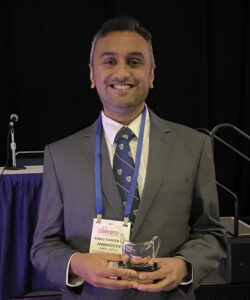
Dr. Anwardeen
“I chose this case because it highlights the intersection between immunology and rheumatology,” Dr. Anwardeen said. “It was not a story of immune excess, but of immune silence [in which] the absence of defense led to inflammation.”
The case reminded him that behind every atypical presentation lies a story waiting to be uncovered.
The take-home message of this case experience was that not all inflammation is caused by immune overactivity. Sometimes, it results from immune absence. Dr. Anwardeen urged clinicians to consider primary immunodeficiency as part of a diagnostic differential in patients with recurrent infections and unexplained arthritis.
He also urged clinicians to consider causes of porcelain aorta because it includes inflammation and chronic infection, as well as hereditary causes.
Explaining the title of his case, Dr. Anwardeen said the silent guard represents the patient’s absent antibody defense, and the ceramic core symbolizes the calcified aorta, calling it a silent scar of chronic inflammation.
“Ultimately, this case reminds us that medicine is not only about the immune system’s actions, but also about its silences and the lasting stories they leave behind,” he said.
Acknowledgements
Dr. Bin Anwardeen emphasized the collective team effort in making the differential diagnosis and change in subsequent treatment strategy for this patient. He specifically expressed gratitude to his consultants and mentors, Dr. Liza Mohd Isa, Dr. Nor Shuhaila Shahril and Dr. Azwarina Hanim Ramlan, for their wisdom, encouragement and constant guidance in shaping every part of the journey of the initial presentation of the patient to the ultimate diagnosis and treatment.
“Their mentorship, along with the support of my colleagues, made it possible to explore this rare case and bring Malaysia’s perspective to an international platform,” he said.