Studies conducted after the implementation of e-consult services have shown reduced wait times in other specialties and decreased need for in-person rheumatology referrals.1,2,3
At Duke University, no protected time is provided for this work. The physicians receive compensation of $25 per completed e-consult.
“In 2025, we also started billing insurance for e-consults,” Dr. Doss said. “Surprisingly, two thirds of e-consults we submitted for billing have actually been paid.” He notes that since billing insurance, patients sometime
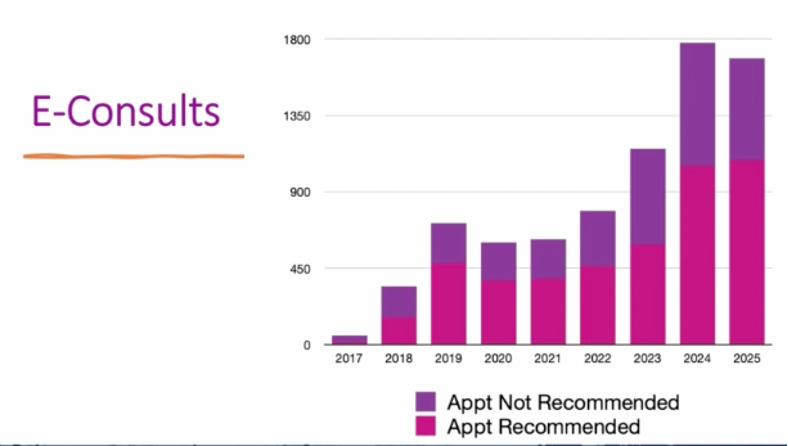
Figure 2: The total number of e-consults completed at Duke University from 2017–2025
s get a bill with an average patient payment of $7.
Of a total of 7,748 e-consults completed in the past nine years at Duke University, 59% had an in-person appointment recommended by the process (Figure 2, below). Now, they receive approximately 30–40 e-consults per week.
Future directions include the potential role of artificial intelligence assisted screening.
Resources for Primary Care Providers
Next, Pankti Reid, MD, MPH, associate professor of medicine at the University of Chicago, presented on the development and implementation of the Rheumatology for Primary Care website, which can be used to help address gaps created by the rheumatology workforce shortage.
A study published on delay from symptom onset to rheumatology assessment showed only 8–42% of patients are seen within the first 12 weeks of symptoms.4 Dr. Reid explained the challenges of the supply-and-demand imbalance combined with a paucity of guidance for efficient rheumatology evaluation.
“There needs to be a more accessible resource to help evaluate and manage patients who cannot get to a rheumatologist in a timely manner,” Dr. Reid said.
The Rheum for Primary Care website was developed by the ACR, funded by an education grant from Pfizer, as a concise, free tool for primary care providers. Content was created by rheumatologists in collaboration with primary care providers and reviewed by disease experts, including disease-specific information and symptom-directed guidance.
The symptoms section provides information for various chief complaints, such as joint pain, muscle weakness, Raynaud’s or rashes. Dr. Reid said, “There are flowcharts for a provider to follow, review differential diagnoses they should consider, and determine what tests to order for initial evaluation.”
Other sections of the website provide an explanation of rheumatology labs and links to medication information from the ACR.
Dr. Reid noted that from October 2024 to October 2025, the website received more than 63,000 views from more than 52,000 active users.