After reviewing data from post-marketing observational studies, the FDA has issued new labeling requirements for opioids with the goal of emphasizing and explaining the risks associated with long-term use.


Michele B. Kaufman, PharmD, BCGP, is a freelance medical writer and editor. She is also a pharmacist at New York Presbyterian Hospital–Lower Manhattan campus. She has been a past guest lecturer at Touro College of Pharmacy in New York City for the Medical Writing elective. Dr Kaufman is a member of the New York City Society of Health-Systems Pharmacy, the New York State Council of Health-System Pharmacists, the Academy of Managed Care Pharmacy (AMCP)—Northeast Region Affiliate Chapter, the American Society of Consultant Pharmacists and the Empire State-Metropolitan NY Chapter of the American Medical Writers Association. She received her BS in Pharmacy from the University of Rhode Island (URI) College of Pharmacy and her Doctor of Pharmacy degree from Massachusetts College of Pharmacy and Allied Health Sciences in Boston. She also completed a Drug Information Fellowship at the URI Drug Information Center/Roger Williams Medical Center in Providence, R.I. Dr Kaufman is a registered pharmacist and is a Board-Certified Geriatric Pharmacist.
After reviewing data from post-marketing observational studies, the FDA has issued new labeling requirements for opioids with the goal of emphasizing and explaining the risks associated with long-term use.
A study from Peene et al. found that patients with primary Sjögren’s disease experienced significant improvements in systemic disease activity and symptoms when treated with intravenous efgartigimod alfa-fcab.

Ustekinumab-stba (Steqeyma) now has FDA approval for all forms and dosages of its reference product, ustekinumab (Stelara), including a subcutaneous injection to treat pediatric patients with plaque psoriasis or psoriatic arthritis.

Early study results demonstrate that rosnilimab may be safe and effective for patients with rheumatoid arthritis, reducing the signs and symptoms of RA by week 12 and achieving important primary and secondary study end points.
Here is a brief recap of the latest FDA-approved biosimilar agents, highlighting their reference products and interchangeability.

Supported by data in patients with new-onset and relapsing giant cell arteritis (GCA), the FDA approved upadacitinib for the treatment of adults with GCA.

Initial findings from a phase 2b clinical trial demonstrate the safety and efficacy of three different daily doses of SAP-001 to lower the serum urate levels of patients with refractory gout.
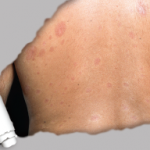
Based on research showing improved signs and symptoms of systemic sclerosis in patients taking cilnidipine vs. placebo, the FDA granted orphan drug designation for the agent.

Nipocalimab, an investigational monoclonal antibody that blocks FcRn and reduces levels of circulating immunoglobulin G (IgG) antibodies, has received the FDA’s breakthrough therapy designation for the treatment of Sjögren’s disease.

Based on research in post-surgery patients, the FDA approved suzetrigine, a non-opioid analgesic, for the treatment moderate to severe, acute pain in adults.