Reviewing the research presented at ACR Convergence 2024.

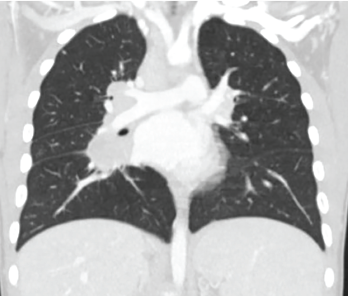
High-resolution computed tomography shows evidence of ILD.
The ACR/CHEST ILD Guidelines in Practice, a video
In collaboration with the American College of Chest Physicians, the ACR released two new comprehensive guidelines aimed at improving the screening, monitoring, and treatment of patients with interstitial lung disease (ILD) secondary to systemic autoimmune rheumatic diseases (SARDs). Recently, Sindhu R. Johnson, MD, PhD, professor of medicine at the University of Toronto, Canada, director of the Toronto Scleroderma Program and principal investigator for the guideline, and Elana J. Bernstein, MD, MSc, Florence Irving associate professor of medicine in the Division of Rheumatology at Columbia University, New York City, and co-first author, presented a webinar to talk about how the guidelines were developed and present some of the recommendations and their rationale: Watch the recording now!
Reviewing the research presented at ACR Convergence 2024.

Doctors and patient advocates urged the rheumatology community to address the drastic inadequacies in care faced by marginalized people in a session held at ACR Convergence 2024.
At a busy and highly successful interim meeting of the AMA House of Delegates, an ACR-cosponsored resolution that calls for exceptions to therapy caps was passed and will become AMA policy. Other areas addressed include payment parity for telemedicine and MIPS reform.

Screening recommendations, triple therapy and more—here are insights into the upcoming ACR guideline for the care and treatment of patients with lupus nephritis.

Experts shared insights into their work on building consensus for the use of musculoskeletal ultrasound for the diagnosis and management of RA and PsA.
The position refers to relevant ACR clinical guidelines and supports continued research and innovative methods for evaluating these modalities in clinical practice.

Rheumatic diseases are intrinsically linked to environmental conditions. With a constantly changing environment, how can rheumatologists adapt to the challenges of global climate change, pollution and other environmental threats? The Environment + Genetics Tamiko Katsumoto, MD, a clinical associate professor in the Division of Immunology and Rheumatology at Stanford University, Palo Alto, Calif., emphasizes the…

WASHINGTON, D.C.—The workforce shortage in rheumatology is a looming crisis that demands immediate attention. The ACR’s 2015 Workforce Study projected that by 2030, the supply of adult rheumatologists would dwindle by 31%, in contrast to the increase in demand by close to 138%.1 The situation is even worse for pediatric rheumatology and in rural and…

WASHINGTON, D.C.—As of November 2024, there are 16 biologic disease-modifying anti-rheumatic drugs (bDMARDs) that are FDA approved for the treatment of psoriatic arthritis (PsA). Incredible news, right? But as my fellowship program director used to say, “There’s no free lunch.” This buffet of options is excellent for our patients, but poses challenges to the practicing…
The 2025 Medicare Physician Fee Schedule final rule, released Nov. 1, includes a conversion factor of $32.3465, a 2.83% drop from 2024. In response to advocacy efforts from the ACR and other medical societies, Congress recently introduced the Medicare Patient Access and Practice Stabilization Act of 2024, which would eliminate the 2.83% payment cut and provide an inflationary update for 2025 equal to 50% of the Medicare Economic Index.