As a physician, I am an advocate. I am an advocate for my patients individually and collectively, and I am an advocate for my field: pediatric rheumatology. My own experiences as a patient drive me to integrate my patients’ perspectives into my medical decision making, and although my academic training has prepared me to best…
Search results for: communication

Nurse Practitioner & Physician Assistant Rheumatology Curriculum Outline Released
A note from ARP President Hazel L. Breland, PhD, OTR/L, FAOTA: Some time has passed since the ACR first published its NP/PA Rheumatology Curriculum Outline. Originally developed to serve as a guide for rheumatologists to onboard a nurse practitioner (NP) or physician assistant (PA) into the rheumatology practice setting, the ACR has realized this valuable resource…
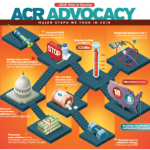
Advocacy in Action: How the ACR Is Working for You
Out of the turmoil of 2018 came a number of significant victories for the rheumatology field, all of which are thanks to the ACR’s volunteers, who spearheaded communication with policymakers. We are thrilled to share these successes and look forward to working with you in an even more productive 2019 (view this larger on our…

These Digital Tools Aren’t Just Hype, Can Actually Help Rheumatologists
CHICAGO—Every minute, it seems, a new digital tool is introduced in medicine. Whether it’s a new digital measuring stick, a new data-crunching system or a new app, the tech tools form an endless convoy of options. But are they worth it? Will they really help you do your job better? Will they help patients feel…

Learn to Lead: Tips for Diagnosing & Resolving Conflict
CHICAGO—Resolving conflict doesn’t start with clever strategizing, but with understanding the bigger picture and the factors that led to conflict in the first place, from cultural differences to resistance to change, an expert said at the 2018 ACR/ARHP Annual Meeting in a session about how to be a better leader. “To me, what’s often missing…

Why & How Our Biologic Drug Discussion with Patients Should Evolve
As we turn the corner on the second decade of biologic use for rheumatic disorders, a reappraisal of approach in our communication with patients is due. In practice, the impact these agents have on patients’ lives justifies the friction rheumatologists face when connecting patients to them. You can understand why older rheumatologists who apprenticed on…
Rheumatology Board Certification: Exploring Change
The ACR has been engaged in a measured, inclusive process with rheumatologists to determine if rheumatology board certification should move from the American Board of Internal Medicine (ABIM) to the American Board of Allergy and Immunology (ABAI), which would become a new, combined board of Allergy, Immunology and Rheumatology. “As ACR leaders have traveled around…
2019 RheumPAC Resolutions
This year’s RheumPAC members are excited to build on their 2018 accomplishments. In 2018, we raised $144,000 from 323 individual investors. Thank you to everyone who invested and to those who supported advocacy for ACR/ARP, its members and our patients. We also introduced a new way for non-individuals (e.g., rheumatology practices, state and local rheumatology…

Social & Psychological Elements Are Vital to Rheumatology Care
CHICAGO—To drive home the importance of how social determinants can make or break a person’s health, Jillian Rose, LCSW, MPH, the director of community, engagement, diversity and research at the Hospital for Special Surgery in New York City, told a story about a gardener planting flowers at the 2018 ACR/ARHP Annual Meeting. In the story,…
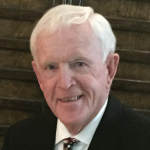
Get to Know the ARP’s Power Couple
Bob and Jan Richardson’s separate paths to physical therapy and rheumatology involve wrestling and horses—although not at the same time. Their intertwining stories also involve a fair amount of serendipity. Mr. Bob Richardson For Bob Richardson, PT, MEd, the path started in the late 1950s, when he was wrapping up a fulfilling college wrestling career…
- « Previous Page
- 1
- …
- 39
- 40
- 41
- 42
- 43
- …
- 97
- Next Page »