Government Affairs Committee member Donald Miller, PharmD, reflects on the effects of rheumatology advocacy work over time, noting that progress is often easier to see from the distance.

Government Affairs Committee member Donald Miller, PharmD, reflects on the effects of rheumatology advocacy work over time, noting that progress is often easier to see from the distance.

“I think we learn from medicine everywhere that it is, at its heart, a human endeavor, requiring good science but also a limitless curiosity and interest in your fellow human being, and that the physician-patient relationship is key; all else follows from it.”1 These profound words from Abraham Verghese, MD, MACP, Linda R. Meier…

The FDA has approved tocilizumab-aazg (Tyenne), the first tocilizumab biosimilar, for treating rheumatic diseases, as well as the new drug application for CB-101, a chimeric antigen receptor T cell therapy, for treating lupus nephritis and extra-renal lupus.

“As a resident, [I] felt pretty terrible when [we had] a very sick child and the teams [couldn’t] agree on what to do,” said Lauren Henderson, MD, MMS, on an episode of ACR on Air. She discussed the importance of collaboration across specialties in the identification and treatment of macrophage activation syndrome (MAS).
The ACR will lead five other specialty societies on a resolution supporting pediatric specialty care and will co-lead resolutions addressing Medicare Advantage Part B drug coverage, white bagging mandates, state prescription drug affordability boards and impacts of alternative funding programs on access to care.
Don’t reinvent the wheel. The ACR Committee on Rheumatologic Care offers members an updated slate of template letters to help appeal insurance denials for common off-label rheumatology treatments.
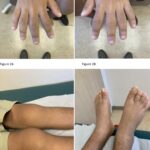
Pachydermoperiostosis (PDP), also known as Touraine-Solente-Golé syndrome or primary hypertrophic osteoarthropathy, is a rare syndrome that can be inherited as autosomal dominant, autosomal recessive, or sporadically. This progressive disease primarily affects males, who tend to have more severe features than females. PDP usually occurs during adolescence, often starting around puberty.1 The main clinical features are…

Implicit bias can affect patient care at the physician level when they’re making treatment decisions and at the healthcare organization level when they’re choosing new hires. Here are insights into strategies rheumatologists can use to become aware of, and question, their implicit biases.

Regaining a sense of control, limiting responsibilities and engaging in mindfulness can help rheumatologists manage their mental health needs. Rheumatologists should also address the mental health concerns raised by their patients. Here are insights from a psychiatrist/rheumatologist.

Checking blood levels of commonly used disease-modifying anti-rheumatic drugs (DMARDs) has gained widespread attention in the rheumatology community, even resulting in a recent guidance document from EULAR for biologics.1 Although a highly useful tool, drug level measurement in rheumatology is not without challenges; many of our drugs violate the basic principles of pharmacology that we…