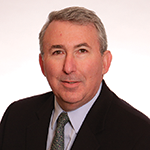
Even with all these pressures, Dr. Feldman sees a silver lining.
“It has been said that novelty, creativity and service are the three things that get people up in the morning as they get older. I believe that the practice of rheumatology offers all three of these,” Dr. Feldman said. “Consequently, in spite of all of these pressures, we are extremely fortunate to be rheumatologists, the best specialty in the world.”
A Bigger Picture Look
Marco Fernandez, MD, president, Association of Independent Medicine and president, Midwest Anesthesia Partners, Naperville, Ill., provided a big-picture look at corporate medicine, from meetings with federal lawmakers in Washington, D.C., to advocacy within various states, to experiences with patient care when his mother was sick.
Dr. Fernandez is the founder of the Association of Independent Medicine, which focuses on preserving physician autonomy, promoting nonprofit and physician-led healthcare models and strengthening regulatory oversight. He founded the group in 2022.
One major concern among corporate medicine, according to Dr. Fernandez, is the vertical integration of insurance companies blending with pharmacies, provider-care services and more. This can lead to higher cost and fewer consumer choices, he said. Dr. Fernandez gave several examples of this type of integration, such as the following with CVS Health as the parent company:
- Insurer: Aetna
- Pharmacy benefit manager: CVS Caremark
- Group purchasing organization: Zinc Health Services
- Manufacturer: Cordavis
- Specialty pharmacy: CVS Specialty
- Retail pharmacy: CVS Pharmacy and Omnicare
- Provider: CVS Minute Clinic, Signify Health and Oak Street Health
These vertically integrated companies represent a consolidation of power and wealth that pervades over independent voices, Dr. Fernandez said.
“I get excited when I go to D.C. and meet with policy makers, then I leave [defeated] because I realize there is very little that we can do,” he said.
Another approach to make the playing field somewhat fairer for independent practices is through advocacy on the state level regarding corporate practice of medicine laws, he said. These are regulations that do not allow corporations or non-physician companies to practice medicine or employ practicing physicians, Dr. Fernandez said. Various states’ laws have nuances within this area.
Leveling the playing field also involves working with specialty organizations and groups such as the American Medical Association, he added. “No one is coming to save us. We need to do more, and we need to be proactive,” Dr. Fernandez said.
On the upside, Dr. Fernandez told the story of how a local hospital terminated a contract with his practice, which has about 38 anesthesiologists. “After nine months of negotiations, they decided to go in a different direction,” Dr. Fernandez said. However, the practice leaders pivoted, focusing on long-term contracts with ambulatory surgical centers (ASCs) and locums tenens work with local hospitals. The practice doubled its number of contracts with ASCs and has found success with their new business model, he said.