Can't Miss Webinar—Lupus Nephritis: The ACR Guideline in Practice

An official publication of the ACR and the ARP serving rheumatologists and rheumatology professionals

  • Conditions
    • Axial Spondyloarthritis
    • Gout and Crystalline Arthritis
    • Myositis
    • Osteoarthritis and Bone Disorders
    • Pain Syndromes
    • Pediatric Conditions
    • Psoriatic Arthritis
    • Rheumatoid Arthritis
    • Sjögren’s Disease
    • Systemic Lupus Erythematosus
    • Systemic Sclerosis
    • Vasculitis
    • Other Rheumatic Conditions
  • FocusRheum
    • ANCA-Associated Vasculitis
    • Axial Spondyloarthritis
    • Gout
    • Lupus Nephritis
    • Psoriatic Arthritis
    • Rheumatoid Arthritis
    • Sjögren’s Disease
    • Systemic Lupus Erythematosus
  • Guidance
    • Clinical Criteria/Guidelines
    • Ethics
    • Legal Updates
    • Legislation & Advocacy
    • Meeting Reports
      • ACR Convergence
      • Other ACR meetings
      • EULAR/Other
    • Research Rheum
  • Drug Updates
    • Analgesics
    • Biologics/DMARDs
  • Practice Support
    • Billing/Coding
    • EMRs
    • Facility
    • Insurance
    • Technology
      • Information Technology
      • Apps
    • QA/QI
    • Workforce
  • Opinion
    • Patient Perspective
    • Profiles
    • Rheuminations
      • Video
    • Speak Out Rheum
  • Career
    • ACR ExamRheum
    • Awards
    • Career Development
      • Education & Training
    • Certification
  • ACR
    • ACR Home
    • ACR Convergence
    • ACR Guidelines
    • Journals
      • ACR Open Rheumatology
      • Arthritis & Rheumatology
      • Arthritis Care & Research
    • From the College
    • Events/CME
    • President’s Perspective
  • Search

The Great Debate: Ultrasound vs. Temporal Artery Biopsy in Giant Cell Arteritis

Michael Cammarata, MD, RhMSUS  |  Issue: January 2026  |  December 10, 2025

To illustrate this point, she presented the case of a 61-year-old man with a new diagnosis of GCA. He had experienced constitutional symptoms for five weeks, jaw claudication and new-onset fronto-temporal headache. Inflammatory markers were elevated and ultrasound demonstrated bilateral halo sign of the temporal arteries. His symptoms and inflammatory markers improved when he was taking 40 mg of prednisone; however, his symptoms returned upon tapering to 30 mg. He underwent temporal artery biopsy, which was negative. Upon referral to the National Institutes of Health (NIH) for a second opinion, urinalysis demonstrated red blood cell casts and serologic testing demonstrated positive anti-myeloperoxidase antibodies. He underwent kidney biopsy and was diagnosed with anti-neutrophil cytoplasmic antibody (ANCA) associated vasculitis with pauci-immune glomerulonephritis.

Dr. Kermani outlined a framework for assessing GCA on the basis of low, intermediate and high pre-test probability, pointing out that ultrasound is most useful on both extremes of the spectrum: a negative study in a low-probability patient or a positive study in a high-probability patient.12 In instances with greater uncertainty or discordant findings, temporal artery biopsy can serve as the decisive test. 

ad goes here:advert-1
ADVERTISEMENT
SCROLL TO CONTINUE

She pointed out that the data for use of ultrasound in GCA originate from expert centers, but many GCA cases are diagnosed by internists or in non-expert centers. “Yes, if you’re Wolfgang Schmidt doing an ultrasound, you don’t need a biopsy, but what about the rest of us? Expertise should dictate your diagnostic approach.”

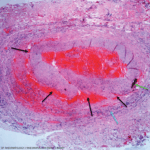
Dr. Kermani provided important recommendations to increase the yield of temporal artery biopsy: they should be 2–3 cm in length, obtained in a timely manner and reviewed directly with the pathologist. Red flags suggestive of an alternative diagnosis include lack of granulomatous inflammation, as well as the presence of fibrinoid necrosis or eosinophils. To close, she noted that evaluation for GCA usually involves more than one diagnostic modality and that rheumatologists should be familiar with them all.

ad goes here:advert-2
ADVERTISEMENT
SCROLL TO CONTINUE

Q&A & Closing Thoughts

During the Q&A section, one attendee expressed concern that temporal artery ultrasound is often performed by technicians without standardized protocols and subsequently read by radiologists without expertise in GCA. Dr. Schmidt whole-heartedly agreed, and recommended rheumatologists spearhead training efforts and establish protocols for vascular imaging. Another attendee also commented on the challenges of obtaining expertise in performing temporal artery ultrasound in the U.S., arguing the debate itself is somewhat artificial and the preference for one study over another is largely based on regional expertise.

Page: 1 2 3 4 5 | Single Page
Share: 

Filed under:ACR ConvergenceConditionsMeeting ReportsVasculitis Tagged with:ACR Convergence 2025ANCA-Associated VasculitisGiant Cell ArteritisThe Great Debate

Related Articles

    Large Vessel Vasculitis

    December 1, 2023

    SAN DIEGO—The large vessel vasculitides, including Takayasu’s arteritis and giant cell arteritis, experienced a surge of interest at ACR Convergence 2023. Here, we highlight important points from 10 of the studies presented at this conference.

    Two Inflammatory Conditions—Polymyalgia Rheumatica and Giant Cell Arteritis—Share Clinical Connection

    March 1, 2013

    Polymyalgia rheumatica (PMR) and giant cell arteritis (GCA) have common clinical and epidemiologic links, but they need not occur synchronously

    Atypical Giant Cell Arteritis Case Illustrates Diagnosis, Management Challenges

    Atypical Giant Cell Arteritis Case Illustrates Diagnosis, Management Challenges

    November 14, 2021

    Giant cell arteritis (GCA) is a granulomatous vasculitis of large- and medium-sized arteries, usually affecting the cranial branches of the aortic arch. It is the most common vasculitis, with the highest risk factor being age. Accurate diagnosis and prompt initiation of therapy are of great importance to prevent serious complications, with the most feared being…

    Advances in Giant Cell Arteritis

    November 14, 2025

    Dr. Philip Seo highlights the latest research into the assessment and treatment of giant cell arteritis presented during ACR Convergence 2025.

  • About Us
  • Meet the Editors
  • Issue Archives
  • Contribute
  • Advertise
  • Contact Us
  • Copyright © 2026 by John Wiley & Sons, Inc. All rights reserved, including rights for text and data mining and training of artificial technologies or similar technologies. ISSN 1931-3268 (print). ISSN 1931-3209 (online).
  • DEI Statement
  • Privacy Policy
  • Terms of Use
  • Cookie Preferences