Two ARP members who currently serve on the ACR Government Affairs Committee discuss why & how they got involved in advocacy.

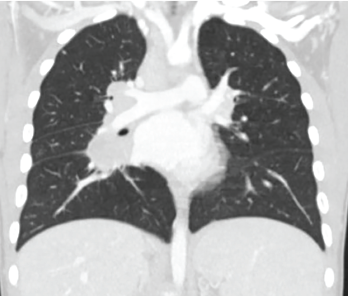
High-resolution computed tomography shows evidence of ILD.
The ACR/CHEST ILD Guidelines in Practice, a video
In collaboration with the American College of Chest Physicians, the ACR released two new comprehensive guidelines aimed at improving the screening, monitoring, and treatment of patients with interstitial lung disease (ILD) secondary to systemic autoimmune rheumatic diseases (SARDs). Recently, Sindhu R. Johnson, MD, PhD, professor of medicine at the University of Toronto, Canada, director of the Toronto Scleroderma Program and principal investigator for the guideline, and Elana J. Bernstein, MD, MSc, Florence Irving associate professor of medicine in the Division of Rheumatology at Columbia University, New York City, and co-first author, presented a webinar to talk about how the guidelines were developed and present some of the recommendations and their rationale: Watch the recording now!
Two ARP members who currently serve on the ACR Government Affairs Committee discuss why & how they got involved in advocacy.

Recent proposals in the U.S. to bill for electronic communication with our patients could be seen as a refreshing but contested attempt to battle burnout rates in the present era. A fee for electronic communications between patients and clinicians also acknowledges the value of the clinician’s time and expertise. But is this ethical? Discussion Burnout…

Fractures in Patients with SSc By Zsuzsanna McMahan, MD, MHS Why was this study done? To minimize disability due to systemic sclerosis (SSc), it’s important to prevent and manage complications. Many SSc complications and related medications may increase the risk for osteoporosis and fracture. We sought to identify modifiable risk factors for fracture in patients…

Healthcare is a high-priority target for cyber criminals. State-level measures, such as a new Florida law, fail to address the root problems of data security but may affect how providers manage patient data.

Discussions between clinicians and their patients about complementary aspects of their care just got easier with the release of the 2022 ACR Guideline for Exercise, Rehabilitation, Diet, and Additional Integrative Interventions for Rheumatoid Arthritis.
On July 13, the Centers for Medicare and Medicaid Services released the CY 2024 Medicare Physician Fee Schedule Notice of Proposed Rulemaking. This annual rule outlines policies related to provider reimbursement, coverage of telehealth services, review of specific codes, refinement of evaluation and management codes and updates to the Quality Payment Program.
The Voice of Rheumatology was established as an informal coalition to aid effective collaborations on issues important to the rheumatology community. The group has grown to become an integral mechanism for the exchange of information among groups including the ACR, Arthritis Foundation, Coalition of State Rheumatology Organizations (CSRO), Alliance for Women in Rheumatology and more to strengthen partnerships on a range of federal, state and regulatory issues.
On July 1, Blue Cross Blue Shield of North Carolina introduced a machine-learning technology platform to make decisions about patients’ care and treatment. The ACR opposes its use on grounds that it may harm patients’ access to treatment and undermine the doctor-patient relationship.

On July 13, the Centers for Medicare & Medicaid Services (CMS) released the Calendar Year 2024 Medicare Physician Fee Schedule and Quality Payment Program (QPP) updates. Notably, the Fee Schedule decreases the conversion factor, which coupled with reimbursement stagnation for payment updates and congressionally mandated cuts, has created financial instability for physicians across all specialties. …
As health insurance companies and third-party benefit managers continue to use copay accumulators and maximizers to shift the cost of specialty drugs to patients, the ACR continues to advocate against programs that limit copay assistance.