NEW YORK (Reuters Health)—An international task force says patients with juvenile idiopathic arthritis (JIA) should be treated to a target of clinical remission, among other new recommendations. “The Task Force is convinced that transferring (the recommendations) into clinical practice will significantly improve the outcomes in patients with JIA,” Dr. Angelo Ravelli of the Istituto G….
Search results for: fever
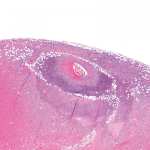
Experts Discuss Proposed Giant Cell Arteritis Risk Tool
A proposed model to predict the risk of giant cell arteritis (GCA) prior to a temporal artery biopsy could help triage patients and guide decision making about the need for biopsy or monitoring (see Figure 1). There’s no specific biomarker for GCA, and GCA can be a “diagnostic conundrum, especially when it presents in an…

Kussmaul, Meier & Polyarteritis Nodosa
In 1866, Adolf Kussmaul, an internist, and Rudolf Maier, a pathologist, published the classic characterization of what eventually became known as polyarteritis nodosa.1 It was the first scientific clinical characterization of a noninfectious vasculitis. As such, it became a paradigmatic point of contrast to other types of vasculitides that were later described. Their description also…

Rheumatology Coding Corner Question: RA Follow-Up with Imaging
History A 39-year-old woman returns for follow-up for her rheumatoid arthritis. She has positive rheumatoid factor, but no organ or systemic involvement. She has joint swelling and pain in her left hand, right elbow and right knee. Her pain is at an 8 on a 10-point scale. She states the pain is worse in the…
Chikungunya Arthritis
In this review, the authors address the key pathophysiologic mechanisms that drive acute and chronic chikungunya arthritis, arguably the most incapacitating sequela among long-lasting chikungunya virus disease manifestations, based on recent animal experimental disease models and epidemiologic studies. They explore the latest findings in therapeutic development aimed at limiting viral spread and at immune and…
Rheumatology Coding Corner Question: Follow-Up Knee Injection
On Nov. 4, a 55-year-old female patient presents to the office for a follow-up visit for injection of the left knee for osteoarthritis. This is her third of three injections that were preauthorized through Oct. 31. She reports pain and swelling in her left knee and rates the pain at an 8 on a 10-point…
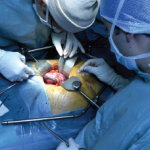
Ethics Forum: What to Do When an Autoimmune Patient Needs a Transplant?
Despite our best efforts and modern interventions, we still have patients in the intensive care unit with organ failure. Although renal failure can be mitigated by dialysis, patients with cardiac or respiratory failure secondary to active autoimmune disease raise difficult clinical and ethical issues. Two recent cases, both with organ failure, led us to examine…

Updates on Giant Cell Arteritis
SAN DIEGO—Recent research tells us more about giant cell arteritis (GCA) to help rheumatologists more accurately diagnose and effectively treat patients with this type of vasculitis. On Nov. 6 at the ACR/ARHP Annual Meeting, three experts explored the latest findings on GCA pathogenesis, diagnostic approaches, imaging modalities and growing treatment options. GCA: What’s Really Happening?…
The Latest Autoinflammatory Discoveries & Tips
SAN DIEGO—Since the identification of the autoinflammatory disease, familial Mediterranean fever (FMF), researchers have identified an alphabet soup of other autoinflammatory diseases with genetic underpinnings, from PAPA (pyogenic arthritis with pyoderma gangrenosum and acne) to NIAID (NLRP1-associated autoinflammation with arthritis and dyskeratosis) to TRAPS (TNF receptor-associated periodic syndrome). The torrent of discoveries, brought about largely…
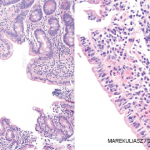
Diagnostic Challenges of SLE & Celiac Sprue
Systemic lupus erythematosus (SLE) can present in many ways and can be difficult to diagnose. Its association with celiac sprue has been only rarely documented, but has appeared in several case reports. When presenting together, it can be difficult to distinguish the underlying disease, because SLE itself has been known to cause malabsorption. This case…
- « Previous Page
- 1
- …
- 27
- 28
- 29
- 30
- 31
- …
- 55
- Next Page »