Social media connections, such as LupusChat and online resources from the ACR’s Lupus Initiative, are providing safe spaces and support for lupus patients during the COVID-19 pandemic…

Social media connections, such as LupusChat and online resources from the ACR’s Lupus Initiative, are providing safe spaces and support for lupus patients during the COVID-19 pandemic…
With usual in-person fundraisers and meetings not possible during the pandemic, RheumPAC is finding creative ways to keep advocating for influential legislation and ensure rheumatology’s voice is heard in Washington, D.C.
Many in-person meetings have been canceled, postponed or moved to virtual formats, likely with lasting economic impacts on state societies.
The ACR’s July 13 online town hall, “COVID-19 Guidance for Community Practices,” covered telehealth, safe clinic reopening and Department of Health & Human Services loans.

As a young child growing up in Oxford, Ohio, Veena Patel, MD, demonstrated a talent for arts and crafts. At age 7, she painted a portrait of her father, now a retired mechanical engineer, which he still proudly admires. Dr. Patel, an assistant rheumatology professor at Dell Medical School—the graduate medical school of the University…

Rheumatologists who are outstanding clinicians, provide consistently exceptional care to patients and serve as role models for colleagues and trainees are in the spotlight in our Lessons from a Master Clinician series. Here, we offer insights from clinicians who have achieved a level of distinction in the field of rheumatology and who are respected by…

At the Johns Hopkins School of Medicine Division of Rheumatology, Baltimore, registered nurses (RNs) are an integral aspect of the rheumatology fellowship program. This gives the fellows information and insight into areas of practice they might not otherwise receive. “This [practice] is a result of our very strong belief that an integrated and interdisciplinary approach,…

Like the medical profession itself, the education of doctors serving in rheumatology fellowships across the nation marches on despite the unexpected hurdles posed by the COVID-19 pandemic. Practice Changes “The pandemic has changed the way our fellows see patients; we are now seeing almost all patients using telemedicine,” says Bonita Libman, MD, FACR, FACP, fellowship…

As rheumatologists, we relish the thrill of diagnostic conundrums that accompany our immune-mediated multi-system and often undifferentiated disease processes. Many rheumatologic diagnoses are essentially diagnoses of exclusion. We’re accustomed to diagnosing iatrogenesis, infection and malignancy as often as we diagnose rheumatic disease. Complex clinical problem solving and critical reasoning are our forte, and to do…
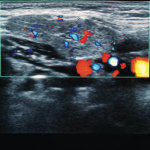
For most rheumatologists, the key elements of the physical exam—inspection, palpation, percussion and auscultation—have long been second nature, but a fifth modality has grown in importance with respect to making the correct diagnosis: ultrasound. From evaluating for Doppler signal and additional findings indicative of synovitis to identifying bony erosions, chondrocalcinosis, tophi and other articular and…