Understanding the role of NLRP3 inflammasome activation in gout flares points to potential of NLRP3 inflammasome inhibitors as a new treatment option.
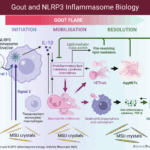
Understanding the role of NLRP3 inflammasome activation in gout flares points to potential of NLRP3 inflammasome inhibitors as a new treatment option.

On May 6, more than 100 members of the rheumatology community participated in 118 meetings with lawmakers from 26 states—urging members of Congress to sustain research funding, address cuts and stabilize Medicare reimbursement, enact pharmacy benefit manager (PBM) reforms and protect Medicaid funding. See photos and stories from the event.
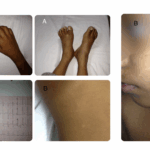
For the 2024 Image Competition, the ACR sought images with educational or remarkable manifestations representing a diverse range of pediatric patients with autoimmune, inflammatory, infectious and malignant drivers of rheumatic disease. Here, we showcase the winning images from South Asia.

Many rheumatology researchers share concerns about the landscape for future opportunities, given recent pressures from the current presidential administration. These may make an already challenging environment even more difficult for academic physicians to successfully navigate. But many in the field will persevere despite obstacles, driven by the need to deepen understanding of these conditions and…
Based on research showing improved signs and symptoms of systemic sclerosis in patients taking cilnidipine vs. placebo, the FDA granted orphan drug designation for the agent.

‘Measuring patient-reported outcomes (PROs) is an important component of high-quality, patient-centered care, but integration of PROs into clinic can be challenging,’ says Physician Editor Bharat Kumar, MD, MME, FACP, FAAAAI, RhMSUS. ‘Luckily, tools exist to help us realize this vital aspect of patient care.’ The ACR’s quality measures for care include gauging disease activity and…

Based on research in post-surgery patients, the FDA approved suzetrigine, a non-opioid analgesic, for the treatment moderate to severe, acute pain in adults.
The FDA approved an oral solution of colchicine for the prevention of gout flare in adults. Its dosage can be easily adjusted on the basis of patient needs.
Yalamanchili et al. describe how trends in disease-modifying anti-rheumatic drug (DMARD) use have evolved for insured, U.S. patients with juvenile idiopathic arthritis. Overall, the study found that from 2000 to 2022 in this patient population the use of biologic and targeted synthetic DMARDs rose, while the use of conventional synthetic DMARDs declined.
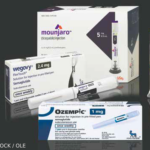
Based on decades of data from dietary and other lifestyle interventions, doctors have long known that significant weight loss can be an effective treatment for people who are overweight and have knee osteoarthritis (OA). One meta-analysis showed that OA pain, function and stiffness scores improved by 2% for every 1% in lost weight.1 But the…