Summaries of selected research abstracts on the assessment & management of systemic vasculitis from ACR Convergence 2024.

Summaries of selected research abstracts on the assessment & management of systemic vasculitis from ACR Convergence 2024.

As measles outbreaks increase domestically & internationally, while vaccination uptake decreases in the U.S., experts discuss treatment recommendations & the immunologic consequences of measles infections in patients with rheumatic diseases.

Ustekinumab-stba (Steqeyma) now has FDA approval for all forms and dosages of its reference product, ustekinumab (Stelara), including a subcutaneous injection to treat pediatric patients with plaque psoriasis or psoriatic arthritis.
Recent research led to development of a cumulative genetic risk score for Takayasu arteritis, identifying differing susceptibility between groups with different genetic ancestries.

Although dryness and other symptoms of Sjögren’s disease continue to vex patients, the prospect of new treatments and a recent name change demonstrate advances in patient care.

Incoming Arthritis & Rheumatology Editor-in-Chief Dr. S. Louis Bridges Jr., MD, PhD, discusses his path to rheumatology and outlines his vision for the journal.

Patient autonomy in healthcare decisions and physician conflicts of interest are just two areas of ethical concerns that arise frequently in rheumatology. Dr. Kelly Weselman discusses ethical dilemmas and how to address them.

Inborn errors of immunity may not always be easy to recognize, but rheumatologists should look out for them. Dr. Bharat Kumar shares his insights.
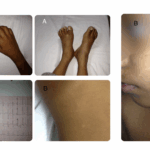
For the 2024 Image Competition, the ACR sought images with educational or remarkable manifestations representing a diverse range of pediatric patients with autoimmune, inflammatory, infectious and malignant drivers of rheumatic disease. Here, we showcase the winning images from South Asia.
Yalamanchili et al. describe how trends in disease-modifying anti-rheumatic drug (DMARD) use have evolved for insured, U.S. patients with juvenile idiopathic arthritis. Overall, the study found that from 2000 to 2022 in this patient population the use of biologic and targeted synthetic DMARDs rose, while the use of conventional synthetic DMARDs declined.