ACR Convergence 2025| Video: Rheum for Everyone, Episode 26—Ableism

An official publication of the ACR and the ARP serving rheumatologists and rheumatology professionals

  • Conditions
    • Axial Spondyloarthritis
    • Gout and Crystalline Arthritis
    • Myositis
    • Osteoarthritis and Bone Disorders
    • Pain Syndromes
    • Pediatric Conditions
    • Psoriatic Arthritis
    • Rheumatoid Arthritis
    • Sjögren’s Disease
    • Systemic Lupus Erythematosus
    • Systemic Sclerosis
    • Vasculitis
    • Other Rheumatic Conditions
  • FocusRheum
    • ANCA-Associated Vasculitis
    • Axial Spondyloarthritis
    • Gout
    • Lupus Nephritis
    • Psoriatic Arthritis
    • Rheumatoid Arthritis
    • Sjögren’s Disease
    • Systemic Lupus Erythematosus
  • Guidance
    • Clinical Criteria/Guidelines
    • Ethics
    • Legal Updates
    • Legislation & Advocacy
    • Meeting Reports
      • ACR Convergence
      • Other ACR meetings
      • EULAR/Other
    • Research Rheum
  • Drug Updates
    • Analgesics
    • Biologics/DMARDs
  • Practice Support
    • Billing/Coding
    • EMRs
    • Facility
    • Insurance
    • Technology
      • Information Technology
      • Apps
    • QA/QI
    • Workforce
  • Opinion
    • Patient Perspective
    • Profiles
    • Rheuminations
      • Video
    • Speak Out Rheum
  • Career
    • ACR ExamRheum
    • Awards
    • Career Development
      • Education & Training
    • Certification
  • ACR
    • ACR Home
    • ACR Convergence
    • ACR Guidelines
    • Journals
      • ACR Open Rheumatology
      • Arthritis & Rheumatology
      • Arthritis Care & Research
    • From the College
    • Events/CME
    • President’s Perspective
  • Search

Expanding Lupus Awareness through Education

Collaborative Initiatives Department Staff  |  Issue: December 2025  |  December 12, 2025

Since 2020, the ACR has received funding support from the U.S. Centers for Disease Control and Prevention (CDC) through the Developing and Disseminating Strategies to Build Sustainable Lupus Awareness, Knowledge, Skills, and Partnerships initiative (CDC-RFA-DP20-2008). This six-year cooperative agreement, which began Sept. 30, 2020, and continues through Sept. 29, 2026, provides more than $9.2 million in total funding (approximately $1.6 million annually) to strengthen lupus awareness and care nationwide.

Each subproject under this agreement aims to increase the awareness, knowledge and skills of healthcare providers—helping clinicians recognize lupus symptoms, initiate appropriate work ups and provide coordinated, culturally and linguistically responsive care.

ad goes here:advert-1
ADVERTISEMENT
SCROLL TO CONTINUE

“Every project within this initiative is designed to close the gap between symptom presentation and diagnosis,” says Starla Hairston, Blanks, MBA, MPH, senior director of collaborative initiatives at the ACR. “We’re seeking to increase the knowledge, skills and confidence of front-line clinicians who see patients first with the information and confidence they need to act.”

Visit https://rheumatology.org/collaborative-initiatives for more information and educational materials.

ad goes here:advert-2
ADVERTISEMENT
SCROLL TO CONTINUE

ACR Fellows in Training Lead the Way

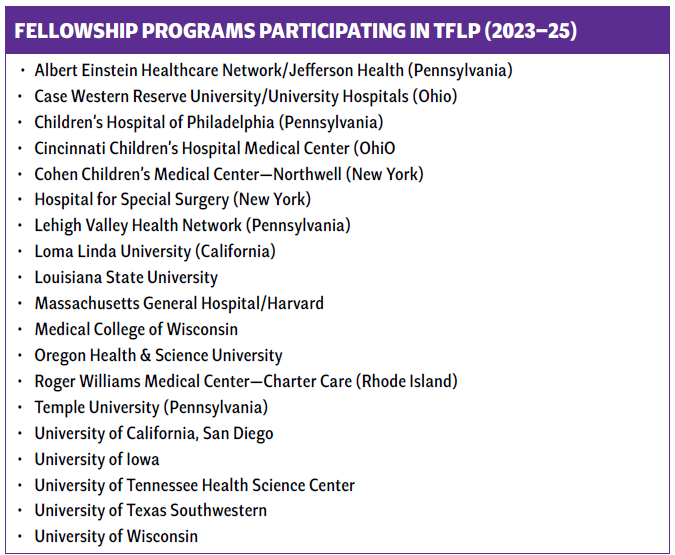
Click to enlarge.

Among the ACR’s most innovative efforts, funded by the Centers for Disease Control and Prevention, is the Teaching Fellows in Lupus Project (TFLP), a program designed to increase the knowledge and confidence of nonrheumatology providers when suspecting lupus and making timely referrals.

Coordinated by the ACR’s Collabora­tive Initiatives Division (COIN), rheuma­tology fellows in training deliver lupus education sessions to physicians, nurse practitioners and physician assistants in their local communities. Each fellow receives a standardized presentation developed by an ACR work group and facilitates one-hour sessions, either in person or virtually, that include pre- and post-tests to measure changes in knowledge and confidence.

Both pediatric and adult rheumatology fellowship programs are engaged in this effort, reaching primary care and community clinicians through partnerships with hospitals, health systems and medical networks.

“It’s an exciting model that strengthens both sides of the education equation,” says Noelle A. Rolle, MBBS, chair of the ACR Collaborative Initiatives Committee. “Fellows gain teaching and leadership experience, while local providers gain the awareness and skills needed to better recognize and refer lupus cases.”

Over the past two years, the Teaching Fellows in Lupus Project has educated more than 1,200 healthcare providers through 85+ sessions across the country.

“Fellows often share how impactful these sessions are not just for attendees, but for their own growth as rheumatologists and peer educators,” says Kate Chiseri, MPH, senior specialist, Collaborative Initiatives.

Bringing Care Education to Areas of Need

Another cornerstone of the Lupus Initiative is the Rural Health Outreach Project, which focuses on reducing health disparities and time to diagnosis in rural and medically underserved communities. This project strengthens referral connections between primary care providers and rheumatologists through targeted education and collaboration.

Click to enlarge.

Educational sessions, designed around a PowerPoint presentation developed by an ACR work group, are delivered by ACR member rheumatologists and include live Q&A sessions. The program collaborates with Area Health Education Centers (AHECs) to recruit and convene rural clinicians for virtual or in-person training.

Through the collaboration ACR has with the National AHEC Organization (NAO), participating sites are selected based on local need and rheumatology access gaps. Rheumatologists continue to serve as regional resources after the sessions, fostering ongoing communication and consultation between rural primary care and specialty care.

Since 2020, Rural Health Outreach sessions have taken place in 25 states across the country, reaching hundreds of clinicians who otherwise might not have direct contact with rheumatology specialists.

In just the past two years, the project has educated more than 380 healthcare providers through more than 10 statewide sessions, fostering new connections between rural providers and rheumatologists while increasing awareness of lupus and lupus disparities.

“These education sessions bring that expertise closer to where patients live,” notes Nat Cabrera, senior specialist, Collaborative Initiatives.

Sustaining Progress & Expanding Reach

As the current cooperative agreement approaches its final year, the Collabor­ative Initiatives Department is working to refine and expand these educational models to ensure long-term impact and alignment with the latest available science in lupus, such as the 2025 ACR Guideline for the Treatment of Sys­temic Lupus Erythematosus.1

“This work reflects the power of partner­ship,” Dr. Rolle says. “By bringing education and connection directly to areas of need, which is a key part of the Collaborative Initiatives charge, whether they’re fellows in training bolstering their education skills or rural primary care providers, these initiatives are helping ensure that patients with lupus are recognized earlier and receive the coordinated care they deserve.”

To learn more about these projects and explore training materials, visit https://rheumatology.org/collaborative-initiatives.

Reference

  1. Sammaritano, LR, Askanase A, Bermas, BL, et al. 2025 American College of Rheumatology (ACR) Guideline for the Treatment of Systemic Lupus Erythematosus (SLE). https://assets.contentstack.io/v3/assets/bltee37abb6b278ab2c/bltdf97323a3723de0f/lupus-guideline-sle-2025.pdf.

Share: 

Filed under:CareerConditionsEducation & TrainingSystemic Lupus Erythematosus Tagged with:Centers for Disease Control and PreventionCollaborative Initiatives Committee (COIN)Fellows-in-TrainingThe Lupus Initiative

Related Articles
    Dorothy.Wedel / shutterstock.com

    How Duke’s School of Medicine Implemented a Quality Improvement Curriculum

    July 15, 2020

    It has been about 20 years since the Institute of Medicine (now the National Academy of Medicine) published the report To Err Is Human: Building a Safer Health System, shining light on the impact of medical errors in healthcare.1 In response to that publication, the focus on quality improvement (QI) started in the inpatient setting,…

    COIN Delivers Lupus Education to Primary Care Physicians

    September 19, 2018

    Two of the ACR’s Collaborative Initiatives (COIN) programs share a goal: to educate non-rheumatologist providers about systemic lupus erythematosus (SLE) symptoms to facilitate referrals, accurate diagnosis and therapy. ad goes here:advert-1ADVERTISEMENTSCROLL TO CONTINUESmall Group Provider Sessions Launched in 2016, Small Group Provider Sessions provide lupus education while connecting frontline providers to a local rheumatologist in…

    The ACR/ARHP Award Winners Discuss Their Contributions to Rheumatology

    January 19, 2016

    At the 2015 ACR/ARHP Annual Meeting in San Francisco in November, the ACR and the ARHP honored a group of distinguished individuals who have made significant contributions to rheumatology research, education and patient care. In the December 2015 issue, The Rheumatologist reported on the ACR’s awards. This month, we speak with the ARHP winners about…

    The ACR’s Collaborative Initiatives Promote Awareness of Lupus, Rheumatic Diseases

    July 11, 2016

    When I began my tenure as ACR president this past November, I posited that it “takes a village” to grow and succeed in rheumatology’s rapidly changing environment. The ACR village includes volunteers who represent a diverse leadership pipeline reflecting the demographics of our younger members. It also includes the international rheumatology community that accounts for…

  • About Us
  • Meet the Editors
  • Issue Archives
  • Contribute
  • Advertise
  • Contact Us
  • Copyright © 2025 by John Wiley & Sons, Inc. All rights reserved, including rights for text and data mining and training of artificial technologies or similar technologies. ISSN 1931-3268 (print). ISSN 1931-3209 (online).
  • DEI Statement
  • Privacy Policy
  • Terms of Use
  • Cookie Preferences