Bringing Care Education to Areas of Need
Another cornerstone of the Lupus Initiative is the Rural Health Outreach Project, which focuses on reducing health disparities and time to diagnosis in rural and medically underserved communities. This project strengthens referral connections between primary care providers and rheumatologists through targeted education and collaboration.
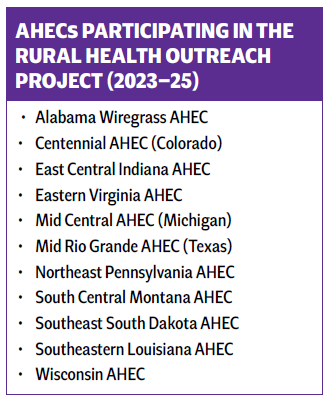
Educational sessions, designed around a PowerPoint presentation developed by an ACR work group, are delivered by ACR member rheumatologists and include live Q&A sessions. The program collaborates with Area Health Education Centers (AHECs) to recruit and convene rural clinicians for virtual or in-person training.

Through the collaboration ACR has with the National AHEC Organization (NAO), participating sites are selected based on local need and rheumatology access gaps. Rheumatologists continue to serve as regional resources after the sessions, fostering ongoing communication and consultation between rural primary care and specialty care.
Since 2020, Rural Health Outreach sessions have taken place in 25 states across the country, reaching hundreds of clinicians who otherwise might not have direct contact with rheumatology specialists.
In just the past two years, the project has educated more than 380 healthcare providers through more than 10 statewide sessions, fostering new connections between rural providers and rheumatologists while increasing awareness of lupus and lupus disparities.
“These education sessions bring that expertise closer to where patients live,” notes Nat Cabrera, senior specialist, Collaborative Initiatives.
Sustaining Progress & Expanding Reach
As the current cooperative agreement approaches its final year, the Collaborative Initiatives Department is working to refine and expand these educational models to ensure long-term impact and alignment with the latest available science in lupus, such as the 2025 ACR Guideline for the Treatment of Systemic Lupus Erythematosus.1
“This work reflects the power of partnership,” Dr. Rolle says. “By bringing education and connection directly to areas of need, which is a key part of the Collaborative Initiatives charge, whether they’re fellows in training bolstering their education skills or rural primary care providers, these initiatives are helping ensure that patients with lupus are recognized earlier and receive the coordinated care they deserve.”
To learn more about these projects and explore training materials, visit https://rheumatology.org/collaborative-initiatives.
Reference
- Sammaritano, LR, Askanase A, Bermas, BL, et al. 2025 American College of Rheumatology (ACR) Guideline for the Treatment of Systemic Lupus Erythematosus (SLE). https://assets.contentstack.io/v3/assets/bltee37abb6b278ab2c/bltdf97323a3723de0f/lupus-guideline-sle-2025.pdf.