Pegloticase is safe and effective to treat patients with refractory gout who are undergoing dialysis, according to recently presented research.

Pegloticase is safe and effective to treat patients with refractory gout who are undergoing dialysis, according to recently presented research.
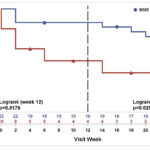
Short-term concomitant use of MMF with pegloticase was generally well tolerated in this proof-of-concept study. It was associated with a statistically significant and clinically meaningful impact on the proportion of subjects achieving and maintaining a sUA ≤6 mg/dL at 24 weeks. See the abstract with bonus video discussing the validation of proposed remission and completion criteria for the treatment of gout.

In light of the release of the ACR’s new gout guideline, it’s not surprising that 50 abstracts of studies on various aspects of gout were accepted at ACR Convergence 2020. Here, we highlight just a few:
ACR Convergence 2020—In May 2020, the ACR published its updated guideline for the management of gout.1 It followed on the heels of a 2017 gout guideline published by the American College of Physicians.2 Although the guidelines provide similar recommendations on the treatment of acute gout, they differ importantly in the use of uric acid-lowering therapy…

ACR CONVERGENCE 2020—The results of a post-authorization study comparing the cardiovascular safety of febuxostat vs. allopurinol were presented in a late-breaking abstract session at the ACR’s fully virtual annual meeting on Monday, Nov. 9. Cardiologist Thomas MacDonald, MD, FRCP, MBChB, clinical professor (teaching and research) of molecular and clinical medicine, University of Dundee School of…

Rheumatologists who are outstanding clinicians and provide consistent, exceptional care to patients are in the spotlight in our Lessons from a Master Clinician series. Here, we present insights from a clinician who has achieved distinction in the field of rheumatology, serving as a role model for colleagues and trainees. Alan Baer, MD, is currently a…

Acute gout can be very painful, causing patients to seek treatment in the emergency department. A retrospective study of pain interventions for gout in Rhode Island found that nearly 30% of patients received prescriptions for opioid medications over 30 months. Of these prescriptions, over 80% were for patients who had never been exposed to opioids…

The umbrella term crystalline disease covers arthritic conditions caused by deposition of crystals and associated inflammatory response, including erythema, edema and intense pain. The two most common crystal-induced arthropathies are gout, an arthritis secondary to inflammation caused by the presence of monosodium urate (MSU) crystals formed through high levels of serum urate, and calcium pyrophosphate…
In light of the release of the ACR’s new gout guideline, it’s not surprising that 50 abstracts of studies on various aspects of gout were accepted at ACR Convergence 2020. Here, we highlight just a few:
In May, the ACR released a new treatment guideline for the management of gout for simultaneous publication in Arthritis & Rheumatology and Arthritis Care & Research.1 Based on evidence from more than 130 published studies, the guideline makes a total of 42 recommendations—of which 16 are strong: It has 27 recommendations for urate-lowering therapy (ULT)…