The ACR has compiled guidelines and tips on how to use the JW modifier and correctly bill Medicare for discarded drugs and biologicals. This modifier can be applied only to unused amounts from a single-dose vial or package.
Search results for: infliximab

Highlights from the ACR Review Course 2022
PHILADELPHIA—At ACR Convergence 2022, the much-anticipated ACR Review Course featured talks from eight experts. Topics reflected the heterogeneity of our field and included Sjögren’s disease, spondyloarthritis (SpA), osteoarthritis (OA), paraneoplastic rheumatic syndromes, metabolic bone disease, statin myopathy, Raynaud’s phenomenon and autoinflammatory syndrome. Here, I share highlights from this comprehensive, six-hour session. Sjögren’s Disease Sara S….
ACR Image Competition 2021 Results, Part 5
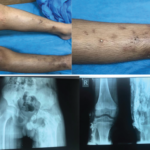
Rheumatic Diseases of Childhood: Juvenile Dermatomyositis with Calcinosis Cutis These images depict a 14-year-old boy with a two-year history of proximal muscle weakness affecting both upper and lower limbs, and a skin rash affecting his face. He was diagnosed with juvenile dermatomyositis and developed calcinosis over both legs with skin infection and ulceration. Plain X-ray…

How to Recognize an Autoinflammatory Disorder
Autoinflammatory disorders may involve genetic mutations of the inflammasome or an environmental trigger in a genetically susceptible host. Dr. Jay Mehta discussed a practical, clinical approach to caring for patients with autoinflammatory disorders, such as periodic fever syndromes, during the 2022 ACR Education Exchange.
Case Report: Abscess as a Manifestation of Autoinflammatory Disease
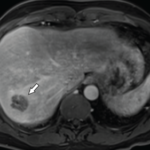
Abscesses are typically caused by infections, but some are, instead, sterile. Aseptic abscesses (AAs) are characterized by the same neutrophil-rich histopathology as infectious abscesses; however, they don’t improve with antibiotics. Rather, AAs require treatment with anti-inflammatory medications. Although relatively rare, this phenomenon is important for rheumatologists to recognize given its frequent association with underlying systemic…

Washington Rheumatology Alliance in the Spotlight
The Washington Rheumatology Alliance is focused on creative ways to increase the rheumatology workforce to meet the demand for care, such as instituting clinical rotations in rheumatology for nurse practitioner programs and advocating for pediatric rheumatologist loan forgiveness.

Medication Preferences & Current Practices for PsA
With many new agents designed to treat PsA, rheumatologists and patients have options. Schwartzman et al. examined the real-world use of different treatments and ranked patient medication preferences.

ARCTIC Rewind: Effects of Half Dose of csDMARDs in Patients with RA in Remission
A study examined the effect of reducing the dose of conventional synthetic disease-modifying anti-rheumatic drugs (csDMARDs) by half in patients with RA in remission, finding the change increased the incidence of flare in 25% of patients.
Case Report: Pulmonary Sarcoid-Like Reaction in Patient Treated with Etanercept
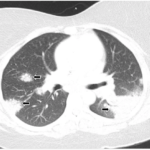
Sarcoidosis is a multisystem disease characterized by noncaseating granulomas in affected tissues, mostly involving the lungs and lymph nodes.1,2 The etiology of sarcoidosis remains unknown but is thought to be due to an inflammatory response to an antigen exposure in genetically predisposed individuals.1 Tumor necrosis factor-α (TNF‑α), a pro-inflammatory cytokine, plays an essential role in…
Case Report: Intermittent Fevers in a Patient with pJIA
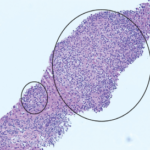
A 26-year-old woman presented to our emergency department (ED) with intermittent fevers, nausea and vomiting. She had a past medical history of well-controlled, anti-nuclear antibody positive and rheumatoid factor negative polyarticular juvenile idiopathic arthritis (pJIA) and Crohn’s disease. Her maintenance treatment consisted of monthly intravenous infliximab, 10 mg of oral methotrexate weekly and 20 mg…
- « Previous Page
- 1
- …
- 7
- 8
- 9
- 10
- 11
- …
- 42
- Next Page »