Obesity is a modifiable risk factor for many patients with knee osteoarthritis (OA), and the National Institutes of Health recommend an initial weight loss goal of 10%. But how does losing more weight affect knee OA patients? In a new study, researchers compared the outcomes of knee OA patients who lost more and less than the recommended 10% of their baseline weight, finding significant improvement in health-related quality of life and reduction in pain for patients who lost twice what’s recommended…
Search results for: knee
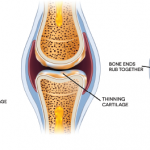
New Research Shows Knee Osteoarthritis Prevalence Is Rising
Studies highlighting the large numbers of people affected by knee osteoarthritis (OA) point to what clinicians who treat knee OA have been seeing for the past few decades: a substantial increase in the prevalence of knee OA in the U.S. and globally. Roughly 250 million people are affected by knee OA worldwide, and about 14…

The FDA Denies Approval for Remoxy Extended Release; Plus Knee OA Pain Treatment Moves into Phase 3 Trials
The FDA has not approved extended release Remoxy, a gel capsule formulation of oxycodone, concluding that its potential benefits do not outweigh its risks…

Tips to Get Knee Replacement Patients to Increase Their Physical Activity
Although total knee replacement (TKR) surgery can improve pain and function in individuals with knee osteoarthritis (OA), many patients who are sedentary before undergoing TKR don’t increase their physical activity levels after surgery. A new study led by Elena Losina, PhD, of the Department of Orthopaedic Surgery at Brigham and Women’s Hospital in Boston, examined…
Larger Weight Loss Tied to Greater Improvements in Arthritic Knees
(Reuters Health)—Obese people with knee osteoarthritis (OA) may find greater symptom relief when they lose larger amounts of weight, a recent study suggests. Researchers examined data on 240 obese adults with pain from knee OA who were participating in an 18-month experiment to see how diet alone or diet plus exercise affected their health. Participants…
Researchers Compare Nonsurgical Knee OA Treatments
According to new research, knee OA patients reported greater pain relief from intra-articular corticosteroids, but naproxen was more effective at improving function…

How Footwear Affects Patients with Medial Knee Osteoarthritis
A patient’s gait, or how they walk, is an important predictor of the biomechanical load distribution that affects osteoarthritis (OA). This understanding comes from a growing body of literature in biomechanics to test and treat patients with OA, which takes into account a very practical treatment: a patient’s shoes. A focus on flexible footwear, along…

Walk This Way: How Footwear Affects Patients with Medial Knee OA
Studying the way patients with knee osteoarthritis walk and changes to footwear are helping patients under the care of Najia Shakoor, MD, and colleagues take control of their pain and possibly delay disease progression…
Rheumatology Coding Corner Answer: Follow-Up Knee Injection
Take the challenge. CPT codes: 20611-LT, 20611-RT, J7326x2 or 20611, 20611-50, J7326x2 ICD-10: M17.0 Coding Rationale CPT Codes: 20610-LT, J7325x16 ICD-10 Code: M17.12 This claim is rejected by the insurance carrier because the injection was outside of the preauthorization window that ended on Oct. 31. Most insurance carriers enforce their preauthorization dates for procedures. In…
Rheumatology Coding Corner Question: Follow-Up Knee Injection
On Nov. 4, a 55-year-old female patient presents to the office for a follow-up visit for injection of the left knee for osteoarthritis. This is her third of three injections that were preauthorized through Oct. 31. She reports pain and swelling in her left knee and rates the pain at an 8 on a 10-point…
- « Previous Page
- 1
- 2
- 3
- 4
- 5
- 6
- …
- 80
- Next Page »