How to grow into a master clinician
CHICAGO—Many of us aspire to be master clinicians with the ability to solve any medical mystery, earning the respect and admiration of our patients and colleagues. But there are few practical ways to learn these skills. This fact can pose a problem for trainees, who are seeking to pursue a path toward clinical excellence, and for the educators, who are tasked with overseeing the maturation of rheumatologists-in-training.
At ACR Convergence 2025, a session titled, Masterclass in Medicine: Help Your Learners Develop the Early Career Habits of Master Clinicians, had an engaging panel discussion on this topic and allowed for a fruitful learning session.
The speakers: The session’s three panelists represented an esteemed group of clinicians.
Dr. Ronald Anderson
Ronald J. Anderson, MD, is the director emeritus of the Rheumatology Fellowship Program at Brigham and Women’s Hospital, Boston. Under his leadership, this program has trained more than 200 physicians, many of whom are now rheumatology leaders themselves, both locally and nationally.
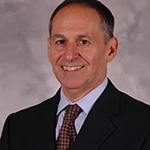
Dr. Pisetsky
David S. Pisetsky, MD, PhD, is a professor of medicine and integrative immunobiology at Duke University School of Medicine, Durham, N.C. In addition to authoring more than 500 papers, articles and chapters related to medicine, Dr. Pisetsky has also written creative and narrative nonfiction essays and short stories. He is also the founding physician editor of The Rheumatologist, a role he served in from 2006 to 2011.
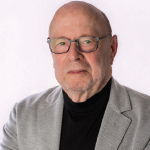
Dr. Michael Weisman
Michael H. Weisman, MD, is professor of medicine emeritus at Cedars-Sinai Medical Center, Los Angeles, where he has served as chief of the Division of Rheumatology. Currently, he is also adjunct professor of medicine in the Division of Rheumatology and Immunology at Stanford University. He has published more than 500 peer-reviewed papers, edited 12 books on rheumatic diseases and continues his mentoring of early career investigators in rheumatology.
Mentorship
The session began with each panelist discussing the mentors and role models who had lasting impacts on each of their careers. Several characteristics of good role models for being a master clinician emerged from this discussion. These role models:
- Actively engage learners and challenge them to think independently;
- Pay attention to the hidden curriculum (i.e., things that are demonstrated implicitly, such as taking an interest in the patient’s life outside the hospital or clinic);
- Keep track of what they have learned from each patient’s case in a systematic fashion to fuel lifelong learning; and
- Show trainees that it is never too late to change your path in medicine.
On this last subject, Dr. Weisman shared how he had already agreed to pursue a nephrology fellowship when he encountered Nathan Zvaifler, MD, a rheumatologist at the University of California, San Diego. Dr. Zvaifler emphasized asking such questions as “What is the mechanism for why this is happening?” and “How does the patient feel about what is going on around them?”