Social media connections, such as LupusChat and online resources from the ACR’s Lupus Initiative, are providing safe spaces and support for lupus patients during the COVID-19 pandemic…

Social media connections, such as LupusChat and online resources from the ACR’s Lupus Initiative, are providing safe spaces and support for lupus patients during the COVID-19 pandemic…

Note: This article was updated July 21 to add recommendations on restarting biologics following COVID-19. On April 29, the ACR released Guidance for the Management of Adult Patients with Rheumatic Disease During the COVID‐19 Pandemic and later updated the guidance for publication in Arthritis & Rheumatology. The recommendations address various treatment options and provide general…
(Reuters Health)—During the COVID-19 pandemic, an inflammatory condition similar to Kawasaki disease has been reported in children and adolescents, and now two groups of New York doctors each describe a case, one in a 36-year-old woman and one in a 45-year-old man.1 “We’re still learning how COVID-19 is affecting children and adults. The better we…
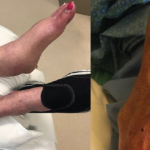
A 61-year-old Caucasian woman with a history of seropositive rheumatoid arthritis (RA) was hospitalized for a several-month history of progressively worsening left ankle pain and swelling. She had been unable to bear weight on her left leg for several days and did not notice improvement in symptoms with 20 mg of prednisone daily, which she…

Patient with autoimmune disease may experience medical emergencies. Here is an overview of recognition and management of three emergent situations for patients with scleroderma: critical digital ischemia, scleroderma renal crisis and intestinal pseudo-obstruction…

Canakinumab, an interleukin (IL) 1 blocker, can now be prescribed to treat patients with active Still’s disease and adult-onset Still’s disease (AOSD)…

Cancer and autoimmunity have a complex relationship. In a presentation, Ami Shah, MD, MHS, discussed how to use autoantibodies as tools for cancer risk stratification, how to approach cancer screening in individuals with new-onset disease and more…

In patients with active ankylosing spondylitis, IL-17 inhibitors have produced favorable responses, according to recent research…

The recommendations for MIS-C focus on general guidance, diagnostic evaluation and therapy options, as well as comparing and contrasting the features of MIS-C and Kawasaki disease.
The recommendations for pediatric rheumatology patients address various treatment options and provide general guidance, as well as direction for when to start, stop or reduce medications.