NEW YORK (Reuters Health)—Interleukin (IL) 1 beta is a key player in the osteoarthritis (OA) inflammatory process and inhibiting it may help slow the disease process, according to an exploratory analysis of data from the CANTOS trial.1 CANTOS participants who were treated with the IL-1-beta inhibitor canakinumab had a significantly lower rate of total hip…

Novel Cathepsin K Inhibitor Promising for OA
Research into the disease-modifying effects of the novel cathepsin K inhibitor MIV-711 suggests it may be effective as a knee OA treatment. In OA patients using the treatment, the study documented statistically significant reductions in bone and cartilage progression…

SM04690 Promising for Knee OA
SM04690, an intra-articular injection for knee OA, will soon enter phase 3 trials to assess its effects on pain, joint function and disease…
Walking Ability of OA Patients Linked to Cardiovascular Risk
New research explores the association of the ability to walk and the risk of cardiovascular disease in OA patients compared with the general population. During the study, researchers recorded a six-minute walking distance and measured arterial stiffness of participants. The results: Even among younger people, OA patients could not walk as far as those in the general population. Also, arterial stiffness was inversely associated with walking distance, suggesting walking is important to the cardiovascular risk profile of OA patients…

Annual Meeting Speakers Review Studies Ranging from Opioids to Fibroblasts
CHICAGO—Findings on opioid efficacy, serum urate in osteoarthritis and arthrocentesis headlined the top research of the year discussed in the first half of a session at the 2018 ACR/ARHP Annual Meeting. The second half covered basic science findings, including summaries of new insights into the gender bias in autoimmune diseases, platelet microparticles in scleroderma and…

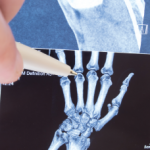
New Joint Space Mapping Technique Doubles Diagnostic Sensitivity for Osteoarthritis
Traditional X-rays, move over—there may be a new gold standard for joint imaging to assess even the smallest changes that can signal the onset of arthritis, as reported recently in the journal Scientific Reports.1 Utilizing the combined expertise of radiologists, rheumatologists and engineers, University of Cambridge researchers developed an algorithm to monitor the joints of…

Inflammation in OA: Signs & Treatment Opportunities
The demonstrated connection between persistent effusion-synovitis and cartilage damage in certain osteoarthritis (OA) patients has implications for targeted treatment that updates previous OA treatment parameters…

3 Experts Discuss Bone Health
SAN DIEGO—At the 2017 ACR/ARHP Annual Meeting Nov. 3–8, experts discussed improving bone health in the U.S., gave tips on bone health disorders in pediatrics and reviewed new translational science findings for joint conservation in early osteonecrosis. E. Michael Lewiecki, MD, director of the New Mexico Clinical Research & Osteoporosis Center in Albuquerque, N.M., called…

New Rheumatology Disease Research & Advice
SAN DIEGO—Top researchers gathered for a review course at the start of the 2017 ACR/ARHP Annual Meeting in November to describe new research, their own treatment strategies and new ways of thinking about an array of rheumatic diseases. Here are the highlights: Raynaud’s & Other Digit Problems When a patient walks into your clinic with…

Does MRI Differentiate Osteoarthritis and Meniscal Tear in Knee Pain?
When a young patient arrives at a clinic complaining of knee pain with clicking or popping, a meniscal tear is often the culprit. “In young [people], there’s a pretty classic presentation of meniscal tear, with clicking and other mechanical symptoms, because the tear rubs up against different tissues,” says Jeffrey Katz, MD, MSc, a rheumatologist…
- « Previous Page
- 1
- 2
- 3
- 4
- 5
- …
- 19
- Next Page »